Travelling alone as a woman in Egypt: what to expect, how to dress, choosing taxis and evenings, handling unwanted attention, and where to get help.
Women travel around Egypt on their own every year, some fully independently and some with a guide for part of the trip. The UK Foreign, Commonwealth and Development Office (FCDO) notes that most visits to Egypt are trouble-free, and it also asks female travellers to take particular care in some situations. This guide covers what to expect day to day, how to choose transport and evenings, how to deal with unwanted attention and where to get help if something goes wrong.
What to expect as a woman travelling alone
Expect attention. You may be stared at, asked where you are from and whether you are married, and followed by a sales pitch for a few steps. Some women also get remarks that are clearly not friendly. None of this is your fault, and it is fine to find it tiring.
Around the big sights and markets, most hassle comes from sellers, touts and people offering "help" you did not ask for: rides, shops, or someone who insists on showing you the way. Much of this is verbal pressure, but harassment can also include unwanted touching. Leave or ask for help when you need to. The FCDO also warns that scammers and touts sometimes target foreign nationals in tourist areas.
You will also meet plenty of ordinary kindness: directions given freely, conversations with other women on a train, an offer of tea. It helps to expect both, and to decide in advance how you want to respond.

Dress and cultural norms
Egypt is a predominantly Muslim country, and outside the Red Sea resorts everyday dress is conservative. The FCDO's advice is to dress modestly, especially in rural areas, mosques and souqs (markets), and it notes that behaviour accepted in tourist resort areas may not be accepted elsewhere.
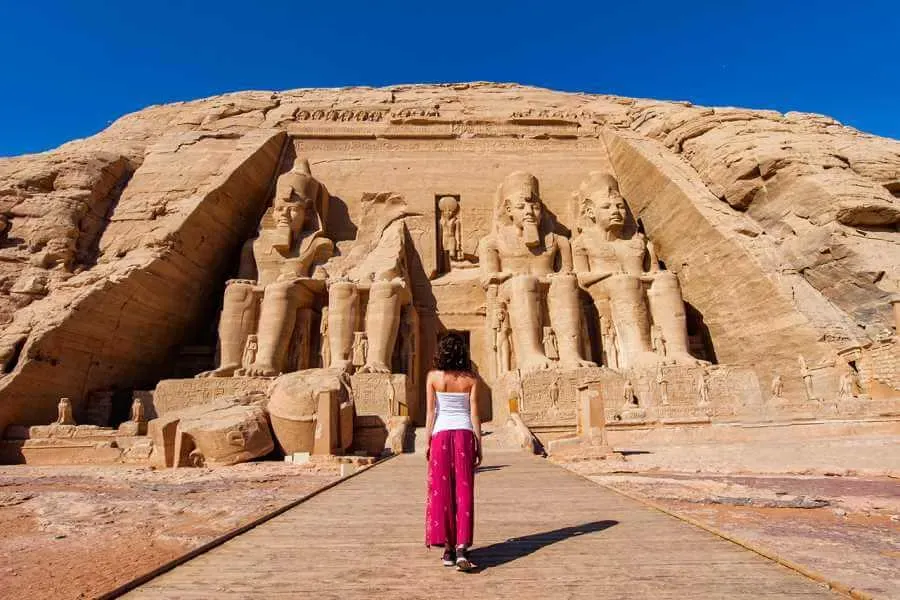
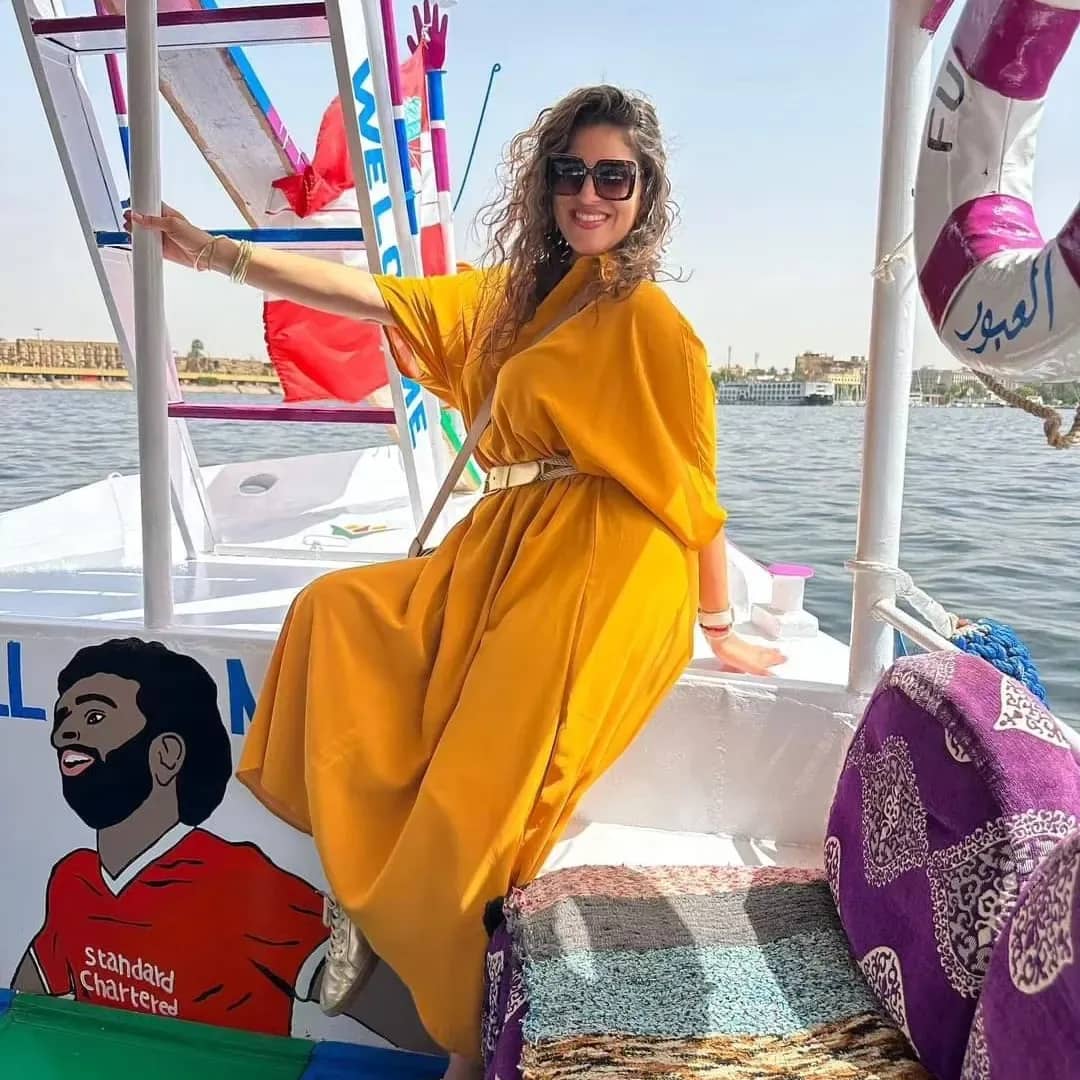
In practice, many women are comfortable in loose clothes that cover the shoulders and knees in cities and at archaeological sites: linen trousers, long skirts and light long-sleeved shirts that also keep the sun off. Carry a light scarf, since you will need to cover your hair and arms to enter a mosque. Swimwear is normal at resort beaches and hotel pools; cover up when you leave them.
Dressing this way is about respect and your own comfort. It may reduce stares, but it will not stop all attention, and no choice of clothing makes harassment your responsibility. See how to dress in Egypt in July and December, social etiquette in Egypt and, if your dates overlap, visiting Egypt during Ramadan.
Getting around: taxis, apps and trains
Taxis are where official advice is most specific. The FCDO says female travellers should exercise caution when travelling alone, particularly at night, in taxis. It recommends avoiding travelling in a taxi alone and, if that is not possible, sharing the details of your driver, trip and live location with a friend.
- Book rather than hail. A ride-hailing app or a car arranged through your hotel or a reputable company leaves a record of the driver and the route. Before you get in, check that the plate and the driver's name match the booking.
- Sit in the back and keep a map open on your phone so you can follow the route.
- Share your trip with someone you trust, as the FCDO suggests, and keep your phone charged. A local SIM or eSIM makes this easier; see our guide to the best eSIM for Egypt.
- Avoid long road journeys after dark. The FCDO advises against driving outside main cities and resorts at night because of road conditions.
In Cairo, the metro has carriages reserved for women; look for the signs on the platform and the train. Between Cairo, Luxor and Aswan, the train and domestic flights are the usual options. Our sleeper train guide describes the overnight service and our public transport guide covers buses and the metro. The FCDO also records serious bus crashes and fatal train accidents in recent years, so read its transport section before you decide.
The FCDO notes that police check ID regularly, so keep your passport and visa with you, or at least a copy of them.
Accommodation and evenings
Choose where you stay partly by location: somewhere central and busy means shorter journeys after dark. Look for reviews from other women travelling alone. On arrival, check that the door locks properly and save the reception number in your phone.
The FCDO advises you not to allow hotel staff into your room when you are alone. If someone knocks unexpectedly, call reception before you open the door. Be as careful with friendly staff and excursion crews as with strangers: the FCDO notes that many reported assaults were committed by someone the victim had already met (see below).
Evenings can be a highlight: a riverside walk, dinner, a sound and light show. Stay in busy, well-lit areas, book your return car before you go out where you can, and tell someone where you are going. If you drink, keep an eye on your glass as you would anywhere.
Handling unwanted attention
There is no single right response, but a few approaches work for many women:
- Comments and calls: not responding and keeping a steady pace is usually the quickest way to end them. You do not owe anyone an explanation.
- Sellers and touts: a short "la, shukran" (no, thank you) and walking on is enough. Do not take items that are pushed into your hand as a "gift"; they usually come with a demand for money. Our guides on dealing with street vendors and scams at the Pyramids go into detail.
- Personal questions: you can keep answers vague. Some women mention a partner or a friend they are meeting, whether or not it is true.
- If someone persists or follows you: go into a shop, café or hotel, move towards other women or families, and ask for help. At major sites, look for the tourist police; their number is 126.
- If someone touches you: make it public. Saying loudly and clearly what happened draws attention to the person responsible, not to you. Then report it.
Trust your instincts. Leaving a situation that feels wrong is always a reasonable choice.
What official travel advice says
The FCDO's safety and security advice for Egypt has a section on sexual assault and harassment. In summary, it says that:
- a number of sexual assaults have been reported to the British Embassy, most of them in Red Sea resorts and often by someone the victim had already met, including hotel workers and excursion staff;
- there have been reports of hotel staff discouraging incidents from being reported to the local police;
- female travellers should exercise caution when travelling alone, particularly at night, in taxis;
- you should not let hotel staff into your room when you are alone, should use reputable providers for services and excursions, and should avoid sharing personal contact or social media details.
The same page says the crime rate is generally low and that visitors should take sensible precautions, as they would at home. Advice changes, so read the current version from your own government shortly before you travel. For the wider picture, including terrorism, regional advice and entry rules, see our guide Is Egypt safe to visit?
Where to get help
The FCDO lists these emergency numbers for Egypt:
- Police: 122
- Ambulance: 123
- Tourist police: 126
- Fire: 180
To report a crime, the FCDO suggests calling the tourist police on 126, and it warns that if you do not report a crime before you leave Egypt, it will be difficult to prosecute later. You can go to the police directly; you do not need your hotel's permission.
Before you travel, save the number of your embassy or consulate in Egypt, and keep your hotel's address written in Arabic. Contact your travel provider and your insurer if you are involved in a serious incident. British nationals can find the FCDO's guidance on getting help in Egypt, including support for victims of crime.
A private guide: what it helps with, and what it does not
Some women book a guide for the busiest sites and explore on their own the rest of the time. A good private guide handles tickets and the practical side of each visit, explains what you are looking at, and makes it easier to turn sellers away because you are clearly with someone. A pre-booked driver removes the question of how to get between sites.
A guide also has limits. A guide is not security staff, is not with you in the evenings or at your hotel, and cannot stop every comment. The FCDO's advice to use reputable providers applies to guides and drivers too: check reviews, and ask who will be guiding you before you book.
If guided sightseeing suits your trip, Nile Empire arranges private tours with certified Egyptologist guides; you can read how they work in our guide to private tours in Egypt.
Frequently asked questions
Can a woman travel around Egypt alone?
Yes. Women travel in Egypt alone, both independently and with a private guide for some or all of the trip. Expect more attention than you may be used to, dress modestly outside the resorts, choose transport with care and read your government's current advice. The UK FCDO asks female travellers to exercise caution when travelling alone, particularly at night, in taxis.
Is it OK to walk around Cairo alone in the evening?
Busy areas with open shops, cafés and families around are generally easier than quiet side streets. Plan your route, stay in well-lit places and arrange your ride back before you go out. If you take a taxi alone, the FCDO suggests sharing the driver's details, your trip and your live location with a friend.
How should I respond if people ask to take photos with me?
If someone asks for a photo, you can say yes or no. A clear "no, thank you" is enough; you do not need to give a reason or share contact details.