Stop stressing over your suitcase! Discover exactly how to dress in Egypt in July vs December. Learn local modesty rules and desert layering secrets for 2026.
Packing for Egypt is rarely a straightforward endeavor. Situated at the crossroads of North Africa and the Middle East, the country presents a unique packing paradox: you must balance extreme climatic variations with stringent cultural modesty rules. If you pack a suitcase based on generalized “desert” assumptions, you will likely find yourself shivering on a Nile Cruise deck in winter or completely overwhelmed by the blazing sun in the Valley of the Kings during summer.
For international travelers arriving in 2026, the question of how to dress in Egypt in july vs december is not just about comfort; it is a critical matter of health, cultural respect, and logistical survival. The difference between an Egyptian summer and an Egyptian winter is profoundly stark. July brings punishing, arid heat that can exceed 40°C (104°F) in the south, while December ushers in crisp, surprisingly cold evenings and biting desert winds, even on a typically breezy Cairo to Alexandria Tour.
Compounding this climatic challenge is the conservative social etiquette of Egypt. What is perfectly acceptable on a private beach in Hurghada is deeply offensive in the streets of Islamic Cairo.
In this comprehensive, expert-led guide, we will dismantle the packing myths. We will provide a definitive breakdown of the exact fabrics, layers, and cultural nuances required to survive the blistering heat of July and the deceptive chill of December, ensuring your Egyptian expedition is both comfortable and culturally frictionless.
Quick Snapshot: July vs. December Climate
To understand why your packing list must change drastically between these two months, review this comparative snapshot of the environmental conditions you will face in Egypt.
| Condition | July (Peak Summer) | December (Peak Winter) |
|---|---|---|
| Average Highs (Cairo) | 35°C (95°F) | 20°C (68°F) |
| Average Highs (Luxor) | 41°C (106°F) | 24°C (75°F) |
| Nighttime Temperatures | Very Warm (24°C / 75°F) | Cold (8°C to 10°C / 46°F to 50°F) |
| Primary Challenge | Severe heatstroke, sunburn, dehydration. | Freezing winds at dawn/dusk, cold hotel rooms. |
| Packing Priority | Ultra-lightweight, breathable linen and cotton. | Fleece jackets, windbreakers, and modular layers. |
(Swipe table to see details)
The Baseline: Unbreakable Cultural Dress Codes
Before addressing the weather, it is paramount to understand that Egypt is a conservative, predominantly Muslim society. The rules of modesty apply 365 days a year, regardless of how hot it gets in July. Ignoring these rules will result in unwanted staring, denial of entry to historical or religious sites, and significant social friction.
Rules for Female Travelers
In public spaces (city streets, markets, and archaeological sites), women should aim to cover their shoulders, cleavage, and knees. Revealing clothing like crop tops, tank tops with spaghetti straps, and short shorts are deeply frowned upon outside of private beach resorts.
- The Scarf Hack: Always carry a lightweight, opaque pashmina or scarf in your daypack. It can be instantly draped over your shoulders to provide modesty when entering a mosque or navigating a crowded bazaar like Khan el-Khalili during a Tour to El Moez Street.
Rules for Male Travelers
While the rules for men are slightly more relaxed, modesty is still expected. Walking bare-chested is strictly prohibited everywhere except the beach. Short shorts are considered inappropriate for adult men in urban environments. Opt for lightweight trousers or tailored shorts that reach the knee.
Surviving July: The Summer Packing Strategy
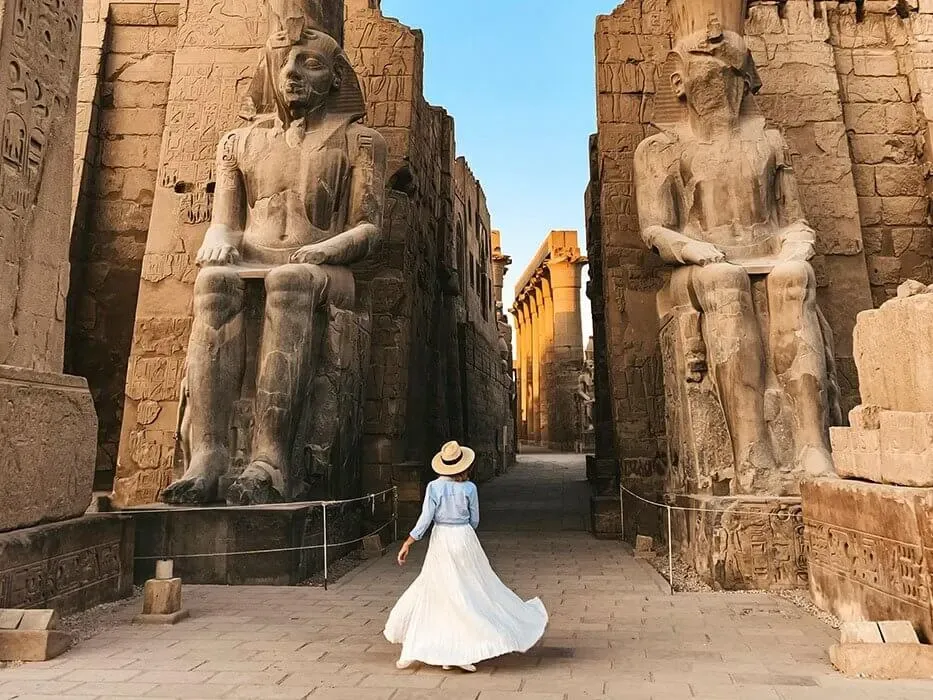
If you are traveling in July, you are venturing into the heart of the Egyptian summer. In southern cities like Luxor and Aswan, the heat is absolute and unforgiving. The sun reflects fiercely off the desert sand and limestone temples, creating an oven-like environment.
The Fabric is Everything
When analyzing how to dress in Egypt in july vs december, the summer strategy relies entirely on fabric composition. Synthetic materials like polyester or nylon will trap heat and sweat, causing severe discomfort and potential heat rash.
- Linen is King: Pack loose-fitting linen trousers, maxi dresses, and long-sleeved linen button-down shirts. Long sleeves in summer might sound counterintuitive, but a loose linen sleeve actually keeps you cooler by protecting your skin from direct UV radiation.
- Breathable Cottons: Light, airy cotton t-shirts and wide-leg cotton pants are excellent. Avoid tight, restrictive clothing like denim jeans entirely.
- Footwear: While sandals are tempting, remember that the ground at archaeological sites is extremely dusty and unpaved. A pair of breathable, lightweight walking sneakers is often more comfortable for a Day Tour to Giza Pyramids, Saqqara, and Memphis.
Beat the Egyptian Summer Heat
Traveling in July requires expert logistical planning to avoid peak sun hours. At Nile Empire, we structure our summer itineraries to start early and include air-conditioned transport, ensuring you see the monuments without suffering heat exhaustion.
Conquering December: The Art of Desert Layering
December is arguably the best time to visit Egypt, offering bright, sunny days that are perfect for exploring. However, it harbors a massive misconception: tourists assume “desert” means “always hot.” This is a critical error.
In December, the desert climate means massive temperature swings. It can be a comfortable 22°C (72°F) at noon, but plummet to a biting 8°C (46°F) at night. Furthermore, Egyptian buildings and Nile Cruise cabins are built to repel heat; they rarely have central heating, making interiors feel surprisingly frigid.
The Layering Protocol
The secret to a successful December wardrobe is aggressive modular layering. You must be able to add or remove clothing quickly as the sun dictates.
- The Dawn Mission Layer: If you are waking up at 4:30 AM for a Hot Air Balloon Luxor Sunrise flight or the grueling Mount Sinai Sunrise Hike, you will need a heavy fleece jacket, a windbreaker, a warm beanie, and even light gloves. The desert wind before dawn is fiercely cold.
- The Midday Base: By 1:00 PM, the sun will be shining brightly. Underneath your jacket, wear a long-sleeved t-shirt or a light sweater that you can comfortably walk around in. Jeans and heavier cotton trousers are perfect for December.
- The Evening Chill: When dining on the open deck of your Nile Cruise, you will definitely want a warm sweater or a stylish pashmina to cut the wind coming off the river.
Comparison: Packing by Region (Cities vs. Coasts)
Egypt is geographically diverse. The rules of engagement change depending on whether you are standing in a metropolitan capital or lounging by the Red Sea.
| Region | July Expectations | December Expectations |
|---|---|---|
| Cairo & The North | Smoggy, intense urban heat. Modesty is strictly enforced. Linen pants are essential. | Cloudy and chilly. Light rain is possible in Alexandria. Bring a warm jacket and jeans. |
| Luxor & Aswan (South) | Extreme desert heat (40°C+). Limit midday exposure. Ultra-light, long sleeves required. | Perfect sunny days, but freezing pre-dawn winds. Heavy layers needed for early tours. |
| Red Sea Resorts | Hot but breezy. Standard resort wear (swimsuits, shorts) is perfectly acceptable, especially during an Orange Bay Snorkeling Tour. | Warm enough to sunbathe at noon, but the water can be chilly. A windbreaker is needed at night. |
(Swipe table to see details)
Non-Negotiable Accessories for Every Season
Regardless of whether you are facing the searing sun of July or the crisp winds of December, certain accessories are universally required for an Egyptian itinerary.
- A Wide-Brimmed Hat: This is not optional. The Egyptian sun is relentless. A baseball cap is insufficient; you need a hat that covers your neck and ears, especially when exploring unshaded areas like the Valley of the Kings.
- High-Quality Sunglasses: The glare off the desert sand and the white limestone of the monuments is blinding. Polarized lenses will significantly reduce eye fatigue.
- A Reliable Daypack: You need a secure bag to carry your water bottles, your emergency modesty scarf, your camera, and, most importantly, space to store the layers you strip off as the December sun warms up.
Pack Your Bags. We’ll Handle the Rest.
Now that you know exactly what to wear, it’s time to solidify your itinerary. From seamless airport transfers to securing premium Egyptologists who know the monuments inside and out, Nile Empire offers the ultimate, stress-free Egyptian holiday experience.
Conclusion
Mastering how to dress in Egypt in july vs december is the definitive first step toward a successful vacation. Packing for Egypt is a unique exercise in balancing extreme weather dynamics with deep cultural respect. If you choose July, commit to loose, breathable linens that protect you from the sun while keeping you culturally compliant. If you choose December, embrace the art of aggressive modular layering to combat the freezing dawns and the warm afternoons.
By preparing intelligently, you eliminate the physical discomforts that plague unprepared tourists, allowing you to focus entirely on the awe-inspiring monuments, the vibrant culture, and the magic of the Nile. Do not let the elements dictate your experience. Let Nile Empire curate an itinerary perfectly optimized for your chosen season, ensuring your journey through ancient history is nothing short of spectacular. Contact our team today to begin planning your flawless 2026 adventure.
Frequently Asked Questions (FAQs)
1. Can I wear shorts in Egypt as a tourist?
It depends on the location and your gender. Men can generally wear knee-length shorts in most areas, though lightweight trousers are preferred in mosques and rural towns. Women should absolutely avoid short shorts in cities and historical sites like Cairo and Luxor to adhere to modesty rules. Shorts are only acceptable for women within the confines of private Red Sea beach resorts.
2. Will I need a winter coat in Egypt in December?
Yes, a warm jacket or heavy fleece is essential. While the afternoons in December can be comfortably warm (around 22°C/72°F), the temperatures plummet rapidly after sunset. If you are doing an early morning tour, like a sunrise hot air balloon ride or a Private Tour to Abu Simbel from Aswan at dawn, the desert wind is freezing, and you will absolutely need a warm coat.
3. What shoes should I pack for visiting the Egyptian temples?
Closed-toe, highly comfortable walking sneakers are mandatory. The terrain around the Pyramids and the temples in Luxor is incredibly dusty, uneven, and covered in sand and loose rocks. While sandals or flip-flops might seem cooler in July, they will leave your feet dirty, blistered, and unprotected from the harsh ground.
4. Do female tourists have to cover their heads in Egypt?
No, covering your head is not a legal requirement for tourists in Egypt. You are only required to cover your hair when explicitly entering a functioning mosque for a tour. However, carrying a light scarf is highly recommended, as it can be used to quickly cover bare shoulders to respect local modesty norms or to protect your neck from the intense sun.
.webp)