Nervous about local customs? Discover what culture shocks to expect in Egypt. Learn the unwritten rules of modesty, traffic, and haggling for a safe trip.
Stepping off the plane in Cairo is not just a change in geography; it is a profound sensory and behavioral immersion. For many western travelers arriving in 2026, the initial exposure to Egypt’s chaotic energy, layered history, and deeply ingrained social norms can trigger a powerful psychological response. If you are currently researching what culture shocks to expect in egypt, you are already taking the most important step toward a successful holiday: mental preparation.
Egypt operates on a fundamentally different frequency than North America or Europe. It is a society where personal space is an abstract concept, where the volume of daily life is turned up to a ten, and where ancient hospitality is inextricably linked with aggressive commerce. Understanding these dynamics is the crucial difference between feeling overwhelmed and feeling culturally enlightened.
The “shock” usually stems not from the majestic Giza Pyramids, but from the intricate, unwritten rules of the streets surrounding them. From the complexities of navigating local traffic to the mandatory etiquette of modest dress and the intricate dance of the “Baksheesh” tipping system, ignorance of the local baseline can lead to intense social friction.
In this comprehensive, relentlessly honest guide, we will dismantle the romanticized brochure imagery. As local experts, we will detail the exact cultural boundaries, social paradoxes, and behavioral expectations you will face, providing actionable strategies to navigate the beautiful chaos of Egypt with grace and confidence.
Quick Snapshot: The Core Culture Shocks
Before analyzing the specific behavioral adjustments you must make, review this baseline snapshot of the most common cultural surprises reported by international tourists in Egypt.
| The Shock Factor | The Egyptian Reality | How to Handle It |
|---|---|---|
| Traffic & Crossing Roads | Pedestrian crossings are often ignored, and traffic rarely stops. | Use a designated crossing where available and cross only when it is safe; ask your guide if you are unsure. |
| Personal Space | The concept is much smaller than what most Western travelers are used to in queues or crowded markets. | Accept the physical proximity without taking offense; it is not meant to be aggressive. |
| Aggressive Commerce | In some tourist areas, vendors may approach you persistently, offer unsolicited “free” gifts, and demand engagement. | Do not make eye contact if not buying. Say a firm, polite “La Shukran” (No thank you). |
| The Right Hand Rule | The left hand is traditionally reserved for personal hygiene. | Always eat, hand over money, and wave using your right hand exclusively. |
(Swipe table to see details)
The Sensory Overload: Traffic and Personal Space
When travelers research what culture shocks to expect in egypt, they often focus on history, but the most immediate shock is physical. Egypt, particularly Cairo, is an intensely dense, high-volume environment.
The Art of Crossing the Street
In western cities, a pedestrian stepping off a curb commands traffic to halt. In Egypt, traffic operates like a river; it flows continuously and finds its way around obstacles. There are very few functioning traffic lights for pedestrians.
Traffic can be difficult to judge. Use a designated crossing where available, wait until it is safe to cross, and ask a local guide for help if you are unsure.
The Concept of the “Bubble”
Westerners are accustomed to a physical “bubble” of personal space, usually about an arm’s length. In Egyptian queues, markets, and public transport, this bubble does not exist. People will stand shoulder-to-shoulder and back-to-chest. This lack of physical distance is not a sign of aggression or rudeness; it is simply the logistical reality of living in a nation of nearly 110 million people.
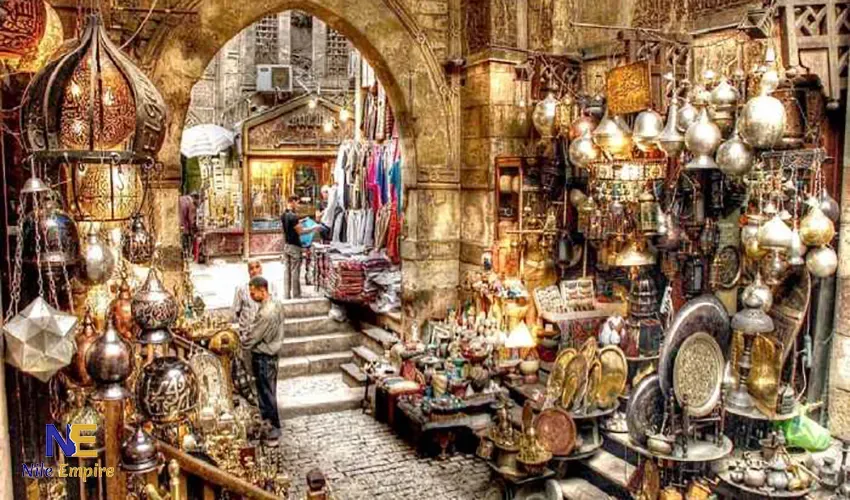
The Hustle: Commerce and the Art of Haggling
Egyptian commerce is not a passive experience. It is a highly active, sometimes aggressive, theatrical performance. For tourists accustomed to fixed prices and quiet retail environments, this is the most exhausting culture shock.
The “Friendly” Vendor
When you approach a major tourist site, such as the Luxor temples, vendors will actively engage you. They may ask where you are from, compliment your appearance, or attempt to hand you a scarab statue or a papyrus bookmark, claiming it is a “free gift” or simply “welcome to Egypt.”
Be cautious when accepting items, as it may imply an expectation of payment. Once you hold the object, the psychological dynamic shifts, and the vendor will immediately demand payment. The most effective strategy is to avoid eye contact entirely, keep your hands firmly in your pockets or holding your bag, and repeatedly state “La Shukran” (No thank you) without breaking your walking stride. For a deeper dive into this dynamic, review our comprehensive guide on how to deal with street vendors in Egypt.
Shield Yourself from the Hustle
The best way to enjoy the monuments without the exhaustion of fending off vendors is to travel with a local expert. Book a comprehensive Egypt Tour Package with Nile Empire. Our guides can help with logistics and vendor interactions while you explore the monuments.
The Baksheesh System: Decoding the Tipping Culture
Many tourists confuse the concept of Baksheesh with simple begging. This is a fundamental misunderstanding of the Egyptian socio-economic structure. Baksheesh translates roughly to “tip,” but it functions as a common tipping practice for small services, rooted in the Islamic concept of charity and the reality of low wages in the service sector.
When and Why to Tip
You will be expected to tip for services that are usually complimentary in the West. This includes:
- The attendant handing you toilet paper in a public restroom (10 EGP).
- The guard at the Valley of the Kings who uses a piece of cardboard to reflect sunlight onto a dark hieroglyphic panel for your photograph (20 EGP).
- The man who helps lift your luggage off the carousel at Cairo Airport.
The cultural shock is not the act of tipping, but the sheer frequency of it. The survival strategy is simple: Always break large bills at your hotel and carry a thick stack of small 10, 20, and 50 EGP notes. View Baksheesh not as an annoyance, but as a customary small tip for some services. For exact figures, consult our guide on how much to tip in Egypt.
Modesty and Decorum: Unbreakable Social Rules
Egypt is a deeply conservative, religious society. The rules governing public behavior, dress, and interaction between genders are strict and non-negotiable.
Public Displays of Affection (PDA)
The Western concept of PDA is entirely incompatible with Egyptian public life. While a married couple holding hands is generally tolerated in tourist areas, passionate kissing, hugging, or sitting on a partner’s lap in public—even while taking a photo during a Tour to Giza Pyramids—is considered deeply offensive and technically violates public decency laws.
The Dress Code Paradox
The dress code depends entirely on geography. Inside the confines of a private Red Sea resort during a Scuba Diving Trip in Hurghada, Western swimwear is normal. However, the moment you leave the resort to walk in a local town, or if you are exploring the streets of Cairo, immediate modesty is required.
Women should ensure their shoulders, cleavage, and knees are covered (loose linen trousers and t-shirts are ideal). Men should avoid walking bare-chested and opt for trousers or tailored shorts that reach the knee. Following local dress norms can show respect for the host culture, though it cannot prevent unwanted attention.
Comparison: Global Norms vs. Egyptian Etiquette
To fully grasp what culture shocks to expect in egypt, it is helpful to directly contrast standard Western behaviors with the required Egyptian etiquette.
| Behavior Category | Western / Global Norm | Egyptian Etiquette Protocol |
|---|---|---|
| Gestures & Pointing | Pointing with the index finger is standard. | Considered rude. Gesture with an open, flat palm instead. |
| Sitting Posture | Crossing legs freely, resting feet on tables. | Never sit in a way that exposes the soles of your shoes to another person. It is deeply insulting. |
| Refusing Hospitality | Saying “No thanks” to an offer of tea or coffee. | Accept the tea. If you cannot drink it, take a sip and place your right hand over your heart in gratitude. |
| Taking Photographs | Snapping photos of street scenes and locals freely. | You MUST ask verbal permission before photographing locals. Never photograph police or military. |
(Swipe table to see details)
Conclusion
Identifying what culture shocks to expect in egypt is not about preparing for a hostile environment; it is about aligning your expectations with a deeply traditional, high-energy society. Egypt is a country of intense hospitality, where locals will genuinely invite you into their homes for tea and where the legacy of the Pharaohs sits firmly beside modern Islamic culture.
The shock only occurs when Western tourists demand that Egypt operates according to Western rules. By embracing the right-hand rule, packing modest clothing, carrying small bills for Baksheesh, and learning how to politely but firmly navigate the street vendors, you neutralize the anxiety.
To truly experience the magic of the Nile without the exhausting friction of cultural misunderstandings, consider partnering with local experts. Nile Empire can help arrange your itinerary and transport while you explore Egypt’s monuments. Contact our team today to begin planning your culturally flawless 2026 expedition.
Frequently Asked Questions (FAQs)
1. Is it safe for unmarried couples to travel together in Egypt?
Yes, in most cases. If both partners hold non-Egyptian, non-Arab passports, hotels generally do not ask for a marriage certificate; a marriage certificate is required for hotel stays when one partner is Egyptian. Keep public displays of affection discreet, out of respect for the culture. For more details, see our guide on unmarried couples in Egypt.
2. Can I drink alcohol in Egypt?
Yes, but only in licensed areas. Egypt is a Muslim country, and drinking alcohol in the street or being visibly intoxicated in public is illegal and highly offensive. Hotels, restaurants, and Nile cruise boats may serve alcohol when licensed.
3. How do I handle traveling during the holy month of Ramadan?
With discretion and respect. During Ramadan, the majority of the country fasts from dawn to sunset. While tourists are not expected to fast, eating, drinking water, or smoking openly in the street during daylight hours is considered very disrespectful. You should consume meals inside your hotel or out of plain sight. Be prepared for altered business hours and intense traffic just before the evening meal (Iftar). Read our full guide on visiting Egypt during Ramadan.
4. Why do Egyptians stare at tourists?
It is usually curiosity, not aggression. In many rural areas or densely populated local markets, international tourists stand out simply due to physical appearance and clothing. Staring is a common cultural trait and is rarely meant to be intimidating. Maintain your modesty, offer a polite smile or nod, and continue on your way.