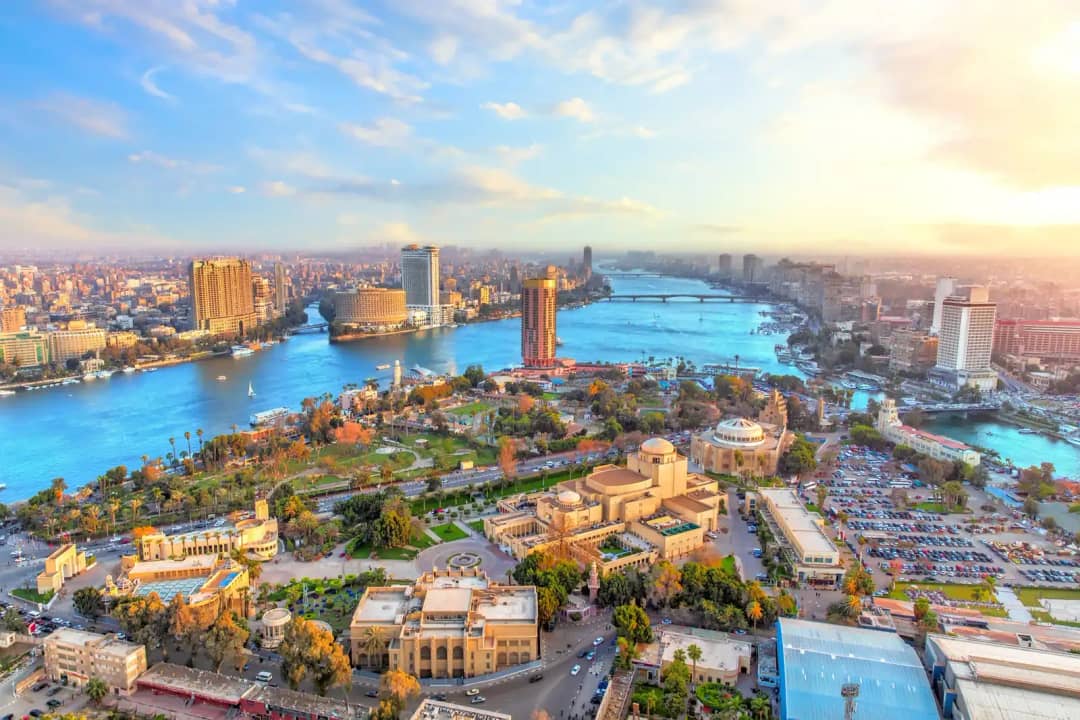
Modern Cairo beyond the pyramids: Cairo Tower views, Zamalek galleries, the Opera House, Downtown's Khedivial streets, Al-Azhar Park, the Nile and the new capital.
Most visitors come to Cairo for the pyramids and the pharaohs, but the city they drive through is a modern capital of glass towers, Nile bridges, galleries, concert halls and new districts spreading into the desert. This guide picks out the contemporary places that are genuinely worth your time, explains what you actually do at each one, and adds a practical tip so you can fit a few of them around your ancient sightseeing.
Zamalek and Gezira: the Tower, the Opera and the galleries
Gezira is the island in the middle of the Nile in central Cairo, and Zamalek is the leafy residential district on its northern half. If you only have one afternoon for modern Cairo, spend it here.
Cairo Tower
The Cairo Tower is the city's best-known modern landmark: a 187-metre concrete tower built between 1956 and 1961, designed by the Egyptian architect Naoum Chebib, with a latticework casing shaped like a stylised lotus plant. You take the lift to the circular observation deck for a 360-degree view across the Nile, Downtown and, on a clear day, out towards Giza. There is also a restaurant at the top.
Tip: the Cairo Governorate advises going up in the late morning or late afternoon for the clearest views. Cairo's air is often hazy, so a day after wind or rain gives you the best chance of seeing the pyramids on the horizon.
Cairo Opera House and the Museum of Modern Egyptian Art
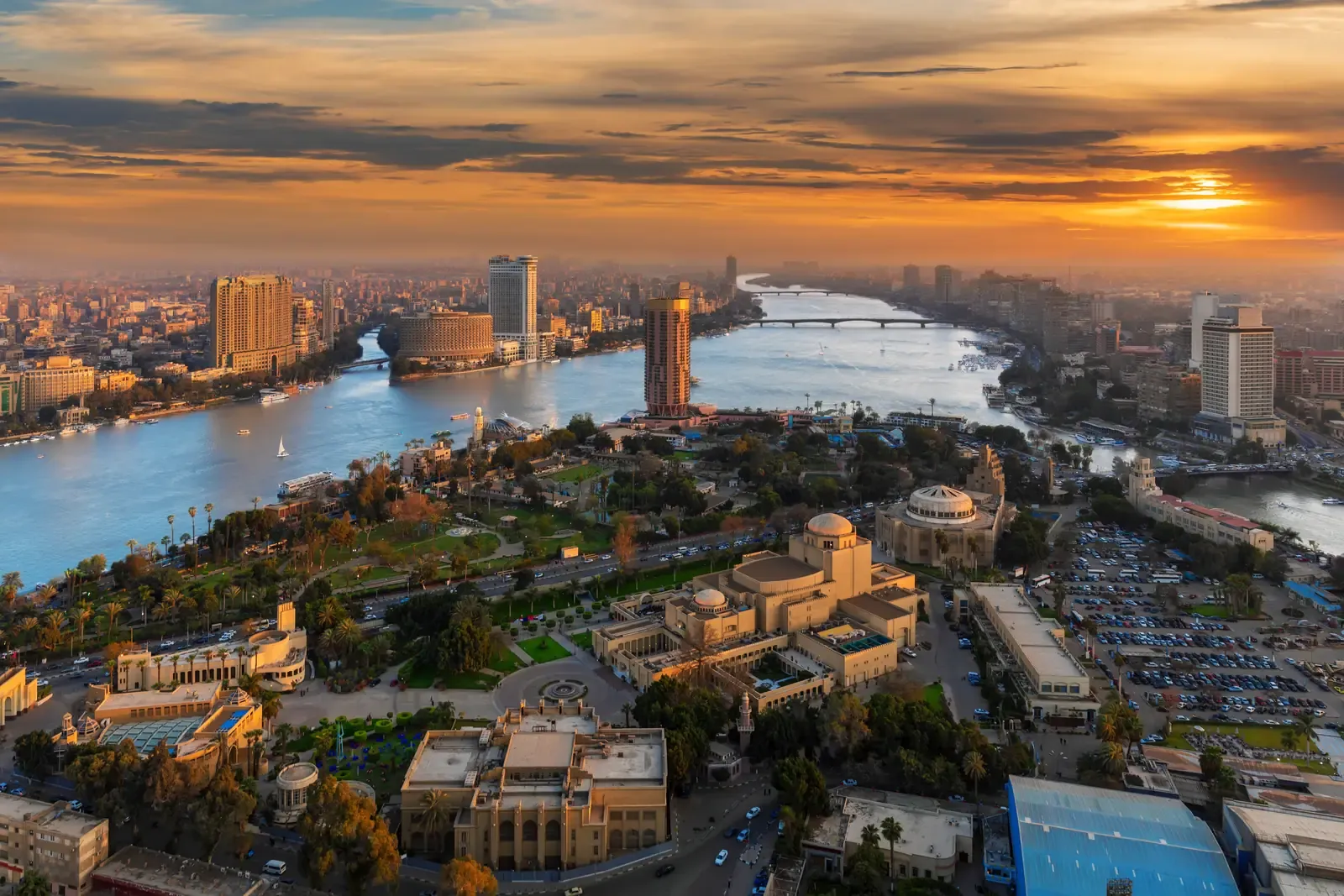
Next to the tower, the Cairo Opera House opened in 1988 on the Nile in Zamalek. The complex has seven theatres; the Main Hall alone seats more than 1,200 people on four levels. The same grounds hold the Museum of Modern Egyptian Art, the Arab Music Institute and an open-air amphitheatre, so you can combine a gallery visit in the day with a concert in the evening.
The museum is a state collection of Egyptian painting and sculpture from the twentieth century onwards, and a good place to see how Egyptian artists responded to their changing country.
Tip: the programme is published on the Cairo Opera House website, with online booking. Ask about the dress code when you book and pack one smart outfit if a performance is on your list.
Zamalek's galleries and cafés
Zamalek is the centre of Cairo's commercial art scene: a January 2026 guide in The National counts more than 30 galleries and art spaces on the island. Established spaces such as the Zamalek Art Gallery hold changing exhibitions of Egyptian artists throughout the year, and the district also has the Museum of Islamic Ceramics in the Prince Amr Ibrahim Palace and the Farouk Hosny Museum, which opened in January 2026 and is devoted to the painter and former culture minister.
Tip: private galleries change shows every few weeks and often close between exhibitions, so check each gallery's current listing on the day.
Downtown: Khedivial Cairo and Tahrir Square
Downtown Cairo, the grid of streets between Tahrir Square and Opera Square, was laid out in the nineteenth century under Khedive Ismail, who commissioned French architects to design geometric, tree-lined streets after his visit to Paris. Many of its apartment blocks mix Islamic and European motifs, neoclassical columns and ornate decoration, and restoration work in recent years has repainted whole facades.
What to do here is simply walk: along Talaat Harb and Qasr El Nil streets and through Talaat Harb Square, looking up at the facades. On Tahrir Square itself, the 2020 redevelopment placed an obelisk of Ramesses II and four ram-headed sphinxes brought from Karnak Temple in Luxor at its centre.
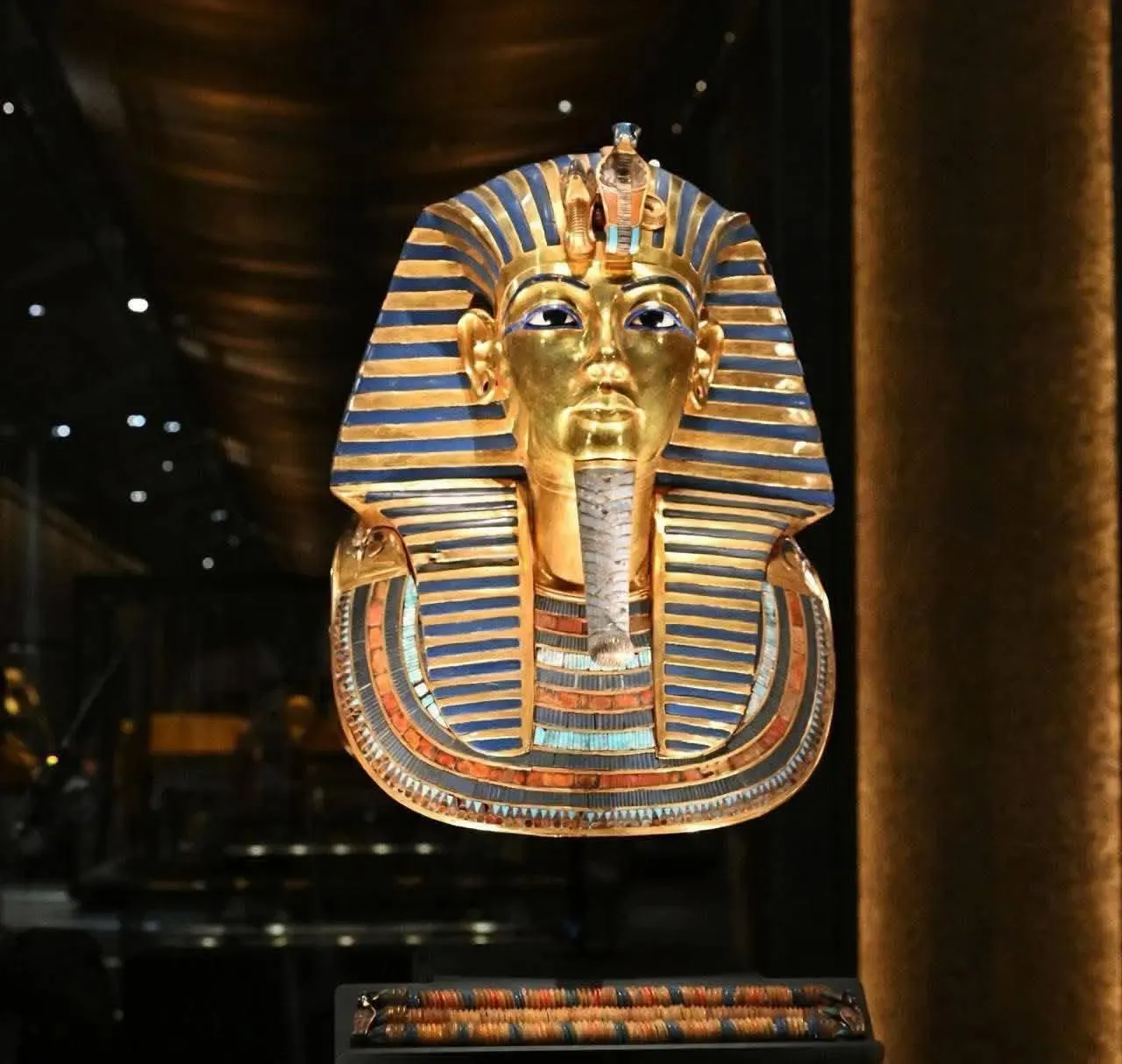
The Egyptian Museum on Tahrir Square is still open, but note that the whole Tutankhamun collection, including the gold mask, has moved to the Grand Egyptian Museum at Giza.
Tip: walk in the early morning or evening, when it is cooler, wear comfortable shoes and take care crossing the wide roads around Tahrir.
On the Nile: the Corniche, feluccas and Mamsha Ahl Misr
The Nile Corniche is the riverside road that runs through the city, and the water is where modern Cairo is easiest to enjoy. From the landings along the Corniche you can hire a felucca (a traditional sailing boat) or a small motorboat for an hour on the river, ideally around sunset when the heat drops and the lights of the towers come on.
North of Downtown, Mamsha Ahl Misr is a newer two-level promenade on the river. Its first phase, 1.8 kilometres between the Imbaba Bridge and the 15 May Bridge, opened in March 2022, with shops, restaurants and cafés along the water.
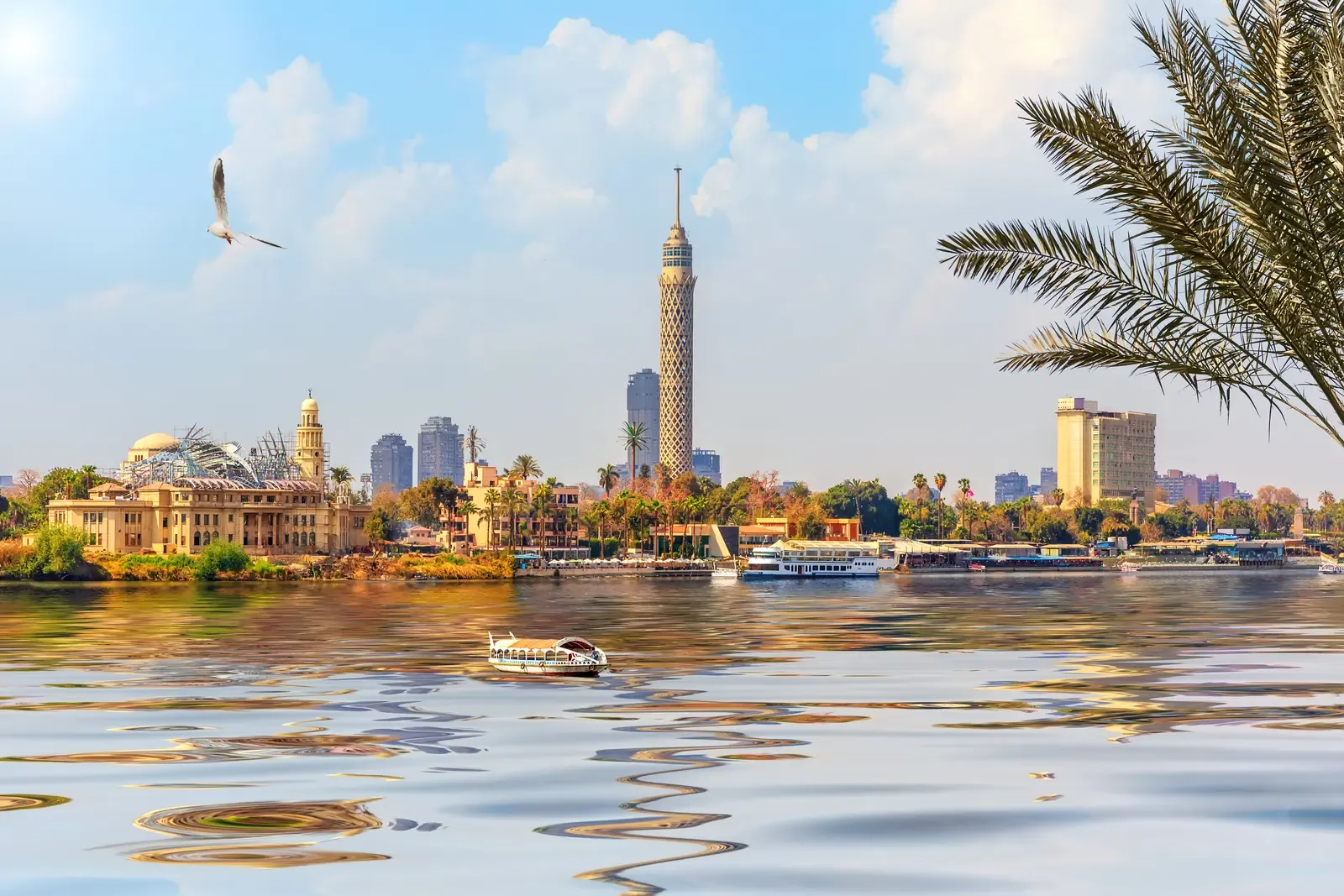
Tip: for a felucca, agree the price and the length of the ride before you step on board. If you prefer dinner on the water, our Cairo Nile dinner cruise is an approximately two-hour evening sailing with an open buffet dinner and live entertainment that typically includes Tanoura and belly dancing, with private hotel transfers; drinks are not included in the basic price.
Al-Azhar Park: the best green view of the skyline
Al-Azhar Park is a 30-hectare park in historic Cairo created by the Aga Khan Trust for Culture and opened in 2005. It was built on a site that had gathered some 500 years of rubble and debris; clearing it exposed a 1.5-kilometre section of the twelfth-century Ayyubid city wall, with towers and battlements almost intact. Today its gardens and paths give wide views over the domes and minarets of Historic Cairo.
Tip: come in the late afternoon and stay for sunset over the city. It pairs well with a walk along El-Moez Street and Khan El Khalili, which are close by. You can read more about the project on the Aga Khan Development Network site.
Heliopolis: the Baron Empain Palace
Heliopolis, in the northeast of the city, began in 1905 as a planned desert suburb, and its best-known building is the Baron Empain Palace. It was built between 1907 and 1911 for the Belgian businessman Baron Empain by the French architect Alexandre Marcel, in an Indian-inspired style with a distinctive tower. After a restoration that began in 2017, the palace reopened in June 2020 with an exhibition on the history of Heliopolis told through photographs, maps, archive documents and films.
Tip: Heliopolis lies on the way to Cairo Airport, so a visit fits well on an arrival or departure day. Check the current visiting details on the Ministry of Tourism and Antiquities' Baron Empain Palace page.
East of the city: New Cairo and the New Administrative Capital
Much of Cairo's recent growth has gone east, into the desert. New Cairo is a district of gated compounds, universities, offices and large malls such as Cairo Festival City, a mixed-use development whose mall has more than 300 shops and restaurants.
Further east is the New Administrative Capital, the new city being built in the desert. Its Central Business District is dominated by the Iconic Tower, a multifunctional office, hotel and commercial skyscraper that its builder, China State Construction Engineering Corporation, gives as 385 metres high and planned as the tallest building in Africa.
Tip: this is an architectural outing rather than a sightseeing district, and the distances are long. Go with a driver, and confirm in advance which buildings and areas are open to visitors.
The Grand Egyptian Museum: new architecture at Giza
The Grand Egyptian Museum, which was inaugurated on 1 November 2025 and opened fully to the public on 4 November, is ancient Egypt housed in contemporary architecture. Designed by Heneghan Peng Architects, it has a translucent facade of locally sourced alabaster, a layout organised on axes aligned with the three pyramids, and a grand staircase rising from the atrium towards a full-height glass wall framing views of the Giza plateau. The Tutankhamun Gallery displays the pharaoh's complete burial treasures.
Tip: give it at least half a day. Our guide to visiting the Grand Egyptian Museum explains whether a guide is worth it, and our private Grand Egyptian Museum tour is led by a certified Egyptologist.
Getting around: the Cairo Metro
The metro is often the quickest way to beat the traffic between central districts. Line 3 now has stations at Nasser in Downtown, Maspero on the Corniche and Safaa Hegazy in Zamalek. Trains have carriages reserved for women.
Tip: avoid the morning and evening rush hours and carry small notes for the ticket window.
Modern Cairo at a glance
| Place | Area | What you do there | Best time |
|---|---|---|---|
| Cairo Tower | Zamalek, Gezira | City panorama from the observation deck | Late morning or late afternoon |
| Cairo Opera House | Zamalek, Gezira | Concerts, opera and the Museum of Modern Egyptian Art | Evening performance |
| Zamalek galleries | Zamalek | Contemporary Egyptian art, cafés, bookshops | Afternoon |
| Downtown and Tahrir Square | Central Cairo | Khedivial architecture on foot | Evening |
| Nile Corniche and feluccas | Along the river | Sailing, riverside walks, dinner cruises | Sunset |
| Al-Azhar Park | Historic Cairo | Gardens and skyline views | Late afternoon |
| Baron Empain Palace | Heliopolis | Restored palace and Heliopolis exhibition | Arrival or departure day |
| Grand Egyptian Museum | Giza | Contemporary museum architecture and Tutankhamun | Half a day or more |
Putting it together
A good way to see both sides of Cairo is to pair each ancient morning with a modern afternoon: the pyramids and the Grand Egyptian Museum, then the Cairo Tower at sunset; Islamic Cairo, then Al-Azhar Park; Downtown on foot, then a felucca on the Nile. For more ideas, see our Cairo travel guide and our list of family-friendly places in Cairo. When you are ready to plan, you can browse our Cairo day tours, private tours with certified Egyptologist guides that can be combined with the modern sights in this guide.