
Navigate Egypt with confidence! See our expert comparison of intercity transport, from sleeper trains to flights. Learn how Egypt’s security infrastructure protects you.
Planning a bucket-list expedition to the land of the Pharaohs is an exhilarating process, but it inevitably comes with a unique set of geographical and logistical challenges. Egypt’s most magnificent treasures are not conveniently confined to a single walkable area. To truly experience the depth of this ancient civilization, your itinerary must bridge vast distances—from the bustling metropolis of Cairo in the north, to the monumental open-air museums of Luxor and Aswan in the deep south.
When travelers gaze at a map of these expansive desert routes and combine it with the way international news often inaccurately portrays the broader Middle East, a very specific anxiety arises. Almost every first-time visitor inevitably types the exact same question into their search bar: is it safe to travel between cities in egypt?
Quick Answer: Is Intercity Travel Safe?
Yes, traveling between cities in Egypt is highly secure for tourists when utilizing recommended methods:
- Domestic Flights: The safest and fastest option (Cairo to Luxor/Aswan).
- Private Tourist Transfers: Highly secure; licensed vehicles with professional drivers pass through monitored checkpoints.
- Sleeper Trains: Safe from crime with lockable private cabins and a tourism police presence.
- Nile Cruises: A very secure and luxurious way to travel in Upper Egypt.
- Avoid: Unregulated local microbuses and self-driving, due to chaotic traffic and road safety concerns.
Independent travel can still be rewarding with proper planning. Conditions vary by route and can change, so use licensed transport and check current official travel advice before traveling. Police and military checkpoints are common on some intercity routes, but their presence does not eliminate travel risk.
To travel smartly in 2026, consider both personal security and road safety. Crime and civil-unrest risks vary by place and current conditions, while traffic can be chaotic; check current official advice and plan each route accordingly.
In this comprehensive, deep-dive guide, we will dismantle the myths and dissect the realities of intercity transit in Egypt. We will explore the safest modes of transportation, demystify the heavy police presence you will encounter on the highways, and provide you with the actionable, expert-level knowledge you need to traverse this ancient country with absolute confidence.
Quick Snapshot: Intercity Travel Modes & Safety Profiles
Before we explore the intricacies of the Egyptian security apparatus and specific regional routes, use this quick snapshot to understand your primary transportation options for intercity travel and their respective safety ratings.
| Transport Mode | Crime Safety Level | Road/Transit Safety Level | Best Suited For |
|---|---|---|---|
| Domestic Flights | Exceptional | Exceptional | Long distances (e.g., Cairo to Luxor, Aswan, or Sharm El Sheikh). |
| Sleeper Trains | High | High | Overnight travel down the spine of the Nile Valley. |
| Private Tourist Transfers | High | Moderate to High | Medium distances (e.g., Luxor to Hurghada, Cairo to Alexandria). |
| Public Coach Buses | Moderate | Moderate | Budget travelers with highly flexible schedules. |
| Microbuses / Minivans | Moderate | Low (High accident rate) | Local commuters; strongly discouraged for international tourists. |
(Swipe table to see details)
The Invisible Shield: Understanding Egypt’s Tourism Police
To answer the question is it safe to travel between cities in egypt, it helps to know that you may see tourism police at major visitor sites and transport hubs. Their presence is one part of site security, but travelers should still follow current official advice and take normal precautions.
You will see these officers stationed at every major hotel entrance, every ancient monument, every museum, and every transportation hub. This widespread, highly visible security presence acts as a massive deterrent to crime. Violent crime against tourists in Egypt is exceptionally rare. You will often feel safer walking through the illuminated streets of major tourist hubs at midnight than you would in many major European or North American capital cities.

The Reality of Highway Checkpoints
If you choose to travel between cities by road—for example, taking a private transfer from the Valley of the Kings through the rugged Eastern Desert to the Red Sea—you will inevitably encounter multiple police and military checkpoints. For travelers from Western countries where highways are entirely open and unregulated, encountering armed guards and concrete barricades can initially feel intimidating or imply danger.
Checkpoints are a standard part of travel on some Egyptian routes. Licensed tourist vehicles may be asked for passenger or trip information. Procedures vary by route and authority; follow your driver’s instructions and carry your passport as required.
Domestic Flights: The Gold Standard for Intercity Travel
Given the sheer, sprawling size of Egypt, the most efficient and statistically safest way to travel between the major hubs is by air. The driving distance from the north down to the deep south is nearly 900 kilometers. Driving this route takes upwards of 12 to 14 hours and subjects you to the unpredictability of highway traffic. Conversely, a domestic flight takes just under 90 minutes.
EgyptAir (the state-owned national carrier) and Air Cairo operate dozens of daily domestic flights connecting major airports. The fleets are modern, the pilots are highly trained, and the safety record is excellent.
Aviation Security Protocols
Aviation security in Egypt is incredibly stringent, often surpassing the protocols found in Western airports. When you arrive at an Egyptian airport for a domestic flight, you do not simply walk up to the check-in desk. You will go through an initial baggage x-ray and metal detector just to physically enter the terminal building.
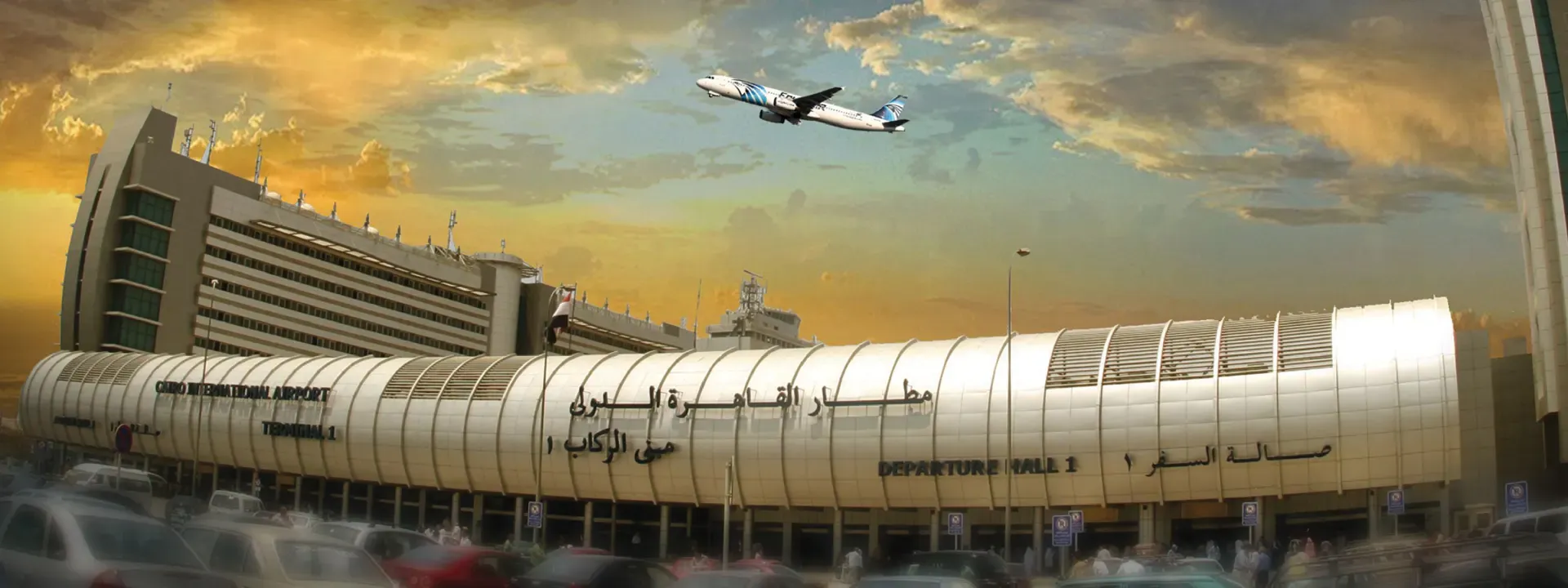
After this initial screen, you will check your bags, proceed through a second, highly rigorous security screening to reach the departure concourse, and frequently face a third manual bag check conducted by security personnel right at the boarding gate before stepping onto the tarmac.
While this multi-layered, intensive process requires you to arrive at the airport at least two full hours before a short domestic flight, it guarantees an exceptionally high level of passenger safety. For travelers on a tight schedule who want to eliminate all road-related anxiety, booking a quick day tour to Luxor from Cairo by air is the ultimate way to safely bypass the vast desert expanses in total comfort and return without exhaustion.
The Classic Route: Is the Sleeper Train Safe?
For those who wish to avoid the hassle of airports, or budget-conscious travelers looking to save on a night of hotel accommodation, the overnight train journey down the Nile Valley remains a romanticized, classic Egyptian experience. Operated primarily by Watania Sleeping Trains, these journeys take you down the agricultural spine of the country under the cover of darkness.
But is it safe to travel between cities in Egypt while sleeping on a moving train? Absolutely. The sleeper trains are heavily utilized by international tourists, and the government secures them with the utmost seriousness.
- Secure, Private Cabins: When you book a sleeper ticket, you are assigned to a private cabin equipped with bunk beds and a sink. Once you are inside for the night, you can securely lock the heavy door from the inside. This ensures complete privacy and total security for your belongings while you sleep.
- On-Board Security Personnel: Tourism police provide security on the main tourist rail routes, including the overnight trains.
- Guarded Train Stations: Major railway hubs feature dedicated tourist police offices, perimeter fencing, and mandatory baggage x-ray screening points at the entrances to ensure nothing dangerous enters the platforms.

While the actual train carriages themselves may show their vintage age, and the ride can occasionally be bumpy due to the older rail infrastructure, personal security is rarely an issue. Reading an Egypt sleeper trains guide will confirm it is a highly secure, time-honored method of navigating the country while watching the sunrise over the rural Nile villages.
Road Travel: Private Transfers vs. Public Buses
When flying or taking the train isn’t practical—such as traveling directly from the southern temples to the Red Sea resorts—you must travel by road. This is where the distinction between crime safety and road safety becomes incredibly critical for tourists to understand.
As previously established, highway banditry or targeted crime against tourists on the roads is not a concern. However, Egyptian driving culture is globally notorious. Traffic rules are frequently viewed as mere suggestions, lane discipline is practically non-existent, and night driving can be highly hazardous due to unlit agricultural vehicles, pedestrians, or poorly marked road edges. Therefore, your choice of vehicle directly dictates your safety.
Public Buses (Go Bus, Blue Bus, Super Jet)
Are public buses safe? Major, reputable coach companies like Go Bus are generally very safe from a crime perspective, and they operate modern, air-conditioned fleets with scheduled rest stops. However, navigating public transport in Egypt can be deeply stressful for foreigners. The bus terminals are notoriously chaotic, English is rarely spoken by the ticketing staff or drivers, and the large buses are subject to the same unpredictable traffic conditions and aggressive driving maneuvers as everyone else on the road.
A Critical Warning: We strongly advise international tourists to absolutely avoid “microbuses.” These are the small, usually white minivans you will see darting erratically through city streets and highways. They are largely unregulated, consistently overcrowded, structurally unsafe, and are involved in a disproportionate number of severe road accidents. They are designed for local, extremely cheap commuting, not for tourist travel.
The Advantage of Private Tourist Transfers
The absolute safest, most comfortable, and most reliable way to travel by road in Egypt is to book a private, licensed tourist transfer. By law, vehicles registered specifically for tourism must be licensed and pass safety inspections.

More importantly, dedicated tourist drivers are seasoned professionals. They are accustomed to driving foreigners and understand the need for a smoother, less aggressive driving style compared to local taxi drivers. When you arrange a pre-booked airport transfer or intercity drive through a reputable agency, your team handles the checkpoint manifests entirely in advance. The driver knows the optimal routes, understands exactly where it is safe and hygienic to stop for rest breaks, and provides a secure, air-conditioned bubble for you and your family.
Why Self-Driving is a Terrible Idea
While it is legally possible for a tourist with an international driving permit to rent a car, it is universally considered a terrible idea. The unwritten rules of Egyptian traffic—which rely heavily on complex honking codes, flashing lights, and aggressive merging—are incomprehensible to outsiders. Furthermore, navigating the military checkpoints without fluent Arabic can lead to massive delays and misunderstandings. Leave the driving to the local professionals.
The Scenic Route: Nile Cruises as Intercity Transport
It is worth noting that for the most popular southern route—the majestic journey bridging ancient capitals—the most relaxing, luxurious, and historically immersive method of intercity travel doesn’t involve roads or rails at all. It involves the Nile River itself.
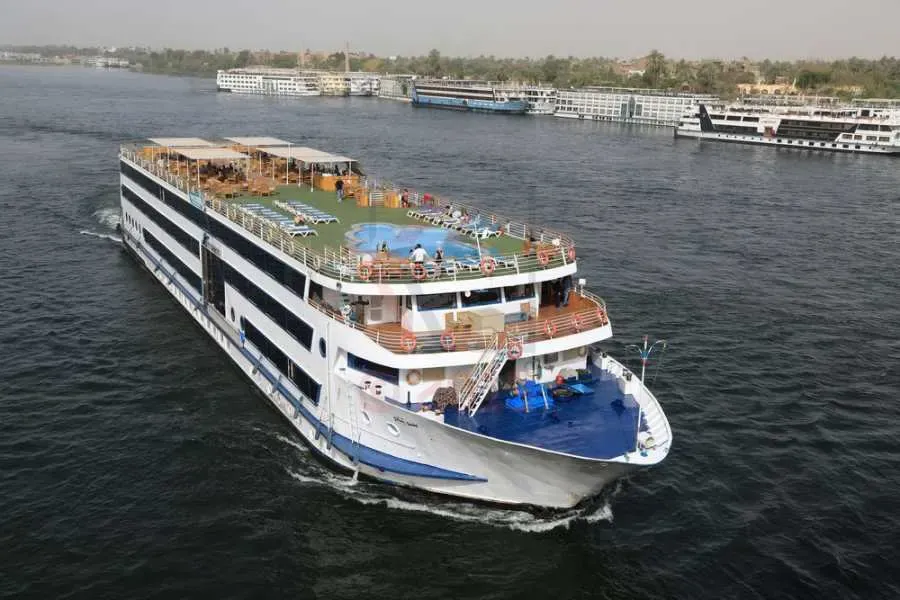
Booking an Aswan to Luxor Nile Cruise entirely negates the question of travel safety. Once you board the floating hotel, you unpack your bags exactly once. The vessel moves you smoothly and safely between cities and major temples while you sleep in a plush bed or relax by the rooftop pool. Security at the docks and on the boats is exceptionally tight, making the Nile cruise an excellent choice for stress-free, deeply secure movement in Upper Egypt.
Comparison: Evaluating Intercity Travel Options
To help you structure your itinerary safely and efficiently, here is a direct, honest comparison of the major intercity transport methods available to tourists in 2026.
| Transport Method | Cost Factor | Comfort Level | Safety & Security Notes |
|---|---|---|---|
| Domestic Flight | High | Excellent | Highest road/crime safety. Strict airport security checks. Best for avoiding fatigue. |
| Sleeper Train | Moderate | Moderate | Very safe from crime (lockable doors, police guards). Good for those who fear flying. |
| Private Car Transfer | Mod-High | Excellent | Safest road option. Drivers are professionally vetted; routes pass through police checkpoints. |
| Public Coach (Go Bus) | Low | Low-Mod | Safe from crime, but subject to aggressive Egyptian highway driving and delays. |
| Nile Cruise | High | Exceptional | Zero road risk. Heavily guarded docks. The most tranquil way to move between southern cities. |
(Swipe table to see details)
Stop Worrying About Logistics
Independent travel in Egypt can be exhausting to coordinate safely. When you book comprehensive Egypt travel packages with Nile Empire, every domestic flight, private transfer, and cruise is booked and coordinated for you by our team.
Conclusion: The Value of Professional Logistics
Intercity travel in Egypt can be planned safely, but conditions and risks vary by route and transport mode. Use licensed operators, check current official travel advice and avoid treating checkpoints or police presence as a guarantee of safety.
The true challenge of traveling in Egypt lies not in personal security, but in navigating the logistics of road safety and travel efficiency. By opting for domestic flights over vast distances, utilizing the timeless charm of the Nile River for regional movement, and relying strictly on licensed, professional drivers for road transfers, you completely bypass the chaos of unregulated local traffic.
Your Egyptian adventure should be defined by the awe of standing before the Great Pyramids and the serenity of cruising the Nile, not by the stress of figuring out how to survive a local bus terminal. By partnering with experts who understand the terrain, you can enjoy a seamlessly secure journey. Focus on the ancient wonders, and let the professionals handle the logistics. Safe travels, and welcome to Egypt.
Frequently Asked Questions (FAQs)
1. Is it safe to travel between cities in Egypt as a solo female traveler?
Yes, it is remarkably safe for solo female travelers to move between cities, provided you use the right transit methods. Domestic flights and pre-booked private transfers are highly recommended. If taking the overnight sleeper train, booking a single private cabin ensures complete security with a lockable door. Dressing conservatively and avoiding public microbuses will further eliminate unwanted attention.
2. Can I rent a car and drive myself between cities in Egypt?
While it is legally possible for tourists to rent cars in Egypt with an international permit, it is highly discouraged by travel experts. Egyptian traffic is chaotic, road rules are loosely followed, and navigating the complex web of military and police checkpoints can be extremely stressful if you do not speak fluent Arabic. Booking a private transfer with a professional driver is infinitely safer and far more relaxing.
3. Are there security checkpoints on the roads between major cities?
Yes, police or military checkpoints are common on some highways, especially on routes between the Nile Valley, the Red Sea and major tourist sites. Procedures vary; use a licensed operator, carry the required identification and follow officials’ instructions.
4. Are night buses a safe way to travel long distances in Egypt?
From a crime perspective, night buses operated by major companies are relatively secure. However, from a road safety perspective, they are generally not recommended for tourists. Nighttime driving in Egypt carries a significantly higher risk of accidents due to poor visibility, speeding, and local drivers operating without headlights. For long distances, it is far safer to book a domestic flight or use the overnight sleeper train.