
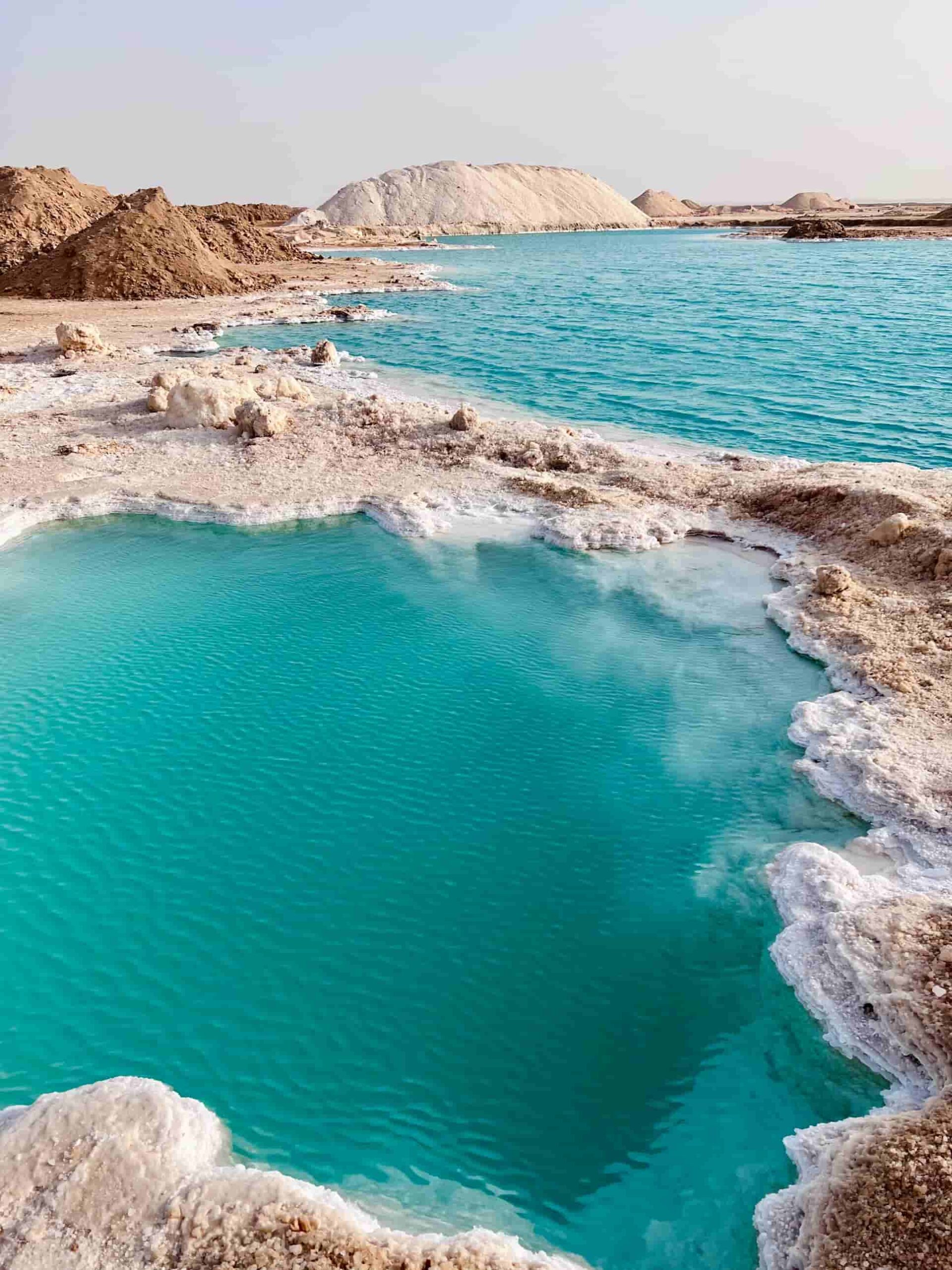
Deep within the Western Desert, far away from the bustling streets of Cairo and the riverbanks of the Nile, lies the Siwa Oasis. A place where time seems to stand still, Siwa is a sanctuary of natural beauty, ancient history, and unique cultural heritage. Unlike any other destination in Egypt, this isolated urban oasis offers a blend of lush date palms, olive trees, crystal-clear salt lakes, and the golden dunes of the Great Sand Sea. For travelers seeking serenity and adventure, Siwa is the crown jewel of the Egyptian desert.

Whether you are a history buff, a nature lover, or someone looking to escape the grid, planning a trip to Siwa requires insight. In this comprehensive guide, we explore the wonders of the oasis, its fascinating history, and why it should be at the top of your travel list with Nile Empire.
If you are short on time but crave the desert experience, you might consider our 3-day Siwa Oasis excursion from Cairo. Alternatively, for a different desert flavor closer to Cairo, the Bahariya Oasis safari offers the unique landscapes of the Black and White Deserts.
A Journey Through History and Culture
Siwa Oasis is not just a geological wonder; it is a historical treasure chest. Inhabited by the Siwi people, who speak their own Berber language (Siwi), the culture here is distinct from the rest of Egypt. The oasis rose to fame in the ancient world as the home of the Oracle of Amun. It was here that Alexander the Great traveled across the harsh desert to consult the oracle, who confirmed his divinity as the son of Zeus-Amun.
To understand the depth of Egypt’s timeline, one must look beyond the Pyramids. While the Ancient Egypt Civilization flourished along the Nile, Siwa remained an independent and mysterious enclave for centuries. Today, visitors can walk through the remnants of this glorious past.
Top Attractions in Siwa Oasis
1. The Shali Fortress
Dominating the center of the town is the Shali Fortress. Built in the 13th century from “kershef” (chunks of salt from the local lakes mixed with clay), this labyrinthine citadel was once a towering hive protecting the population from Bedouin attacks. Although heavy rains in the 1920s dissolved much of the salt-structure, the ruins remain a spectacular vantage point, especially at sunset.
2. The Mountain of the Dead (Gebel al-Mawta)
A short distance from the town center lies Gebel al-Mawta, a conical mountain honeycombed with rock-cut tombs dating back to the Pharaonic and Greco-Roman periods. The intricate wall paintings inside tombs like that of Si-Amun offer a glimpse into ancient burial rites.

If you are fascinated by ancient necropolises, a visit here complements a trip to the Valley of the Kings in Luxor. While Luxor’s tombs are grand and royal, Siwa’s are intimate and uniquely blend Egyptian and Greek artistic styles.
3. Cleopatra’s Spring (Ain Juba)
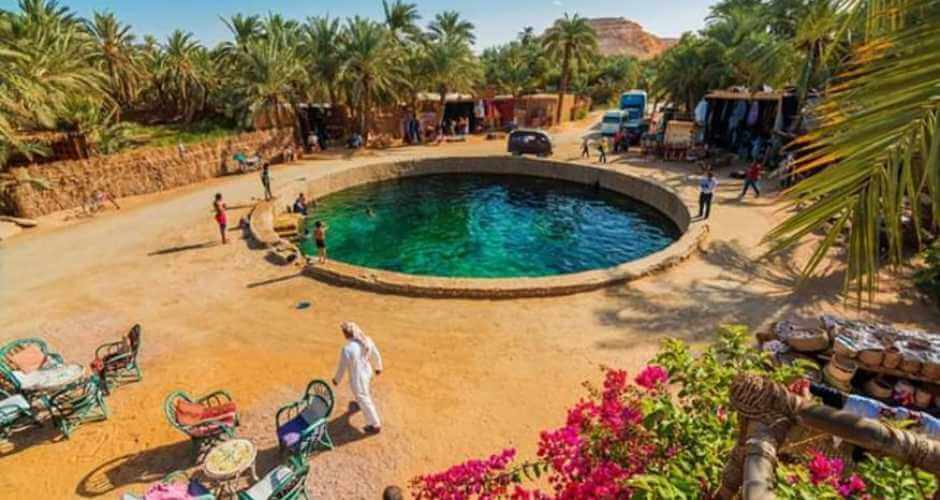
One of the most famous tourist spots in Siwa is Cleopatra’s Spring. Despite the name, there is no historical evidence that Queen Cleopatra ever swam here, but that doesn’t diminish its allure. It is a natural stone pool fed by underground water, surrounded by cafes and palm trees. It is the perfect spot to take a dip and cool off after a day of exploration.
For those looking for more hidden treasures across the country, check out our guide to 12 unique things to do in Egypt.
Nature’s Miracle: The Salt Lakes
Perhaps the most “Instagrammable” feature of Siwa today is its stunning Salt Lakes. These pools possess a shade of blue so clear and vibrant it seems unearthly. Due to the extremely high salt concentration, similar to the Dead Sea, you cannot sink. Floating effortlessly in these cool waters while surrounded by white salt crystals is a therapeutic experience.
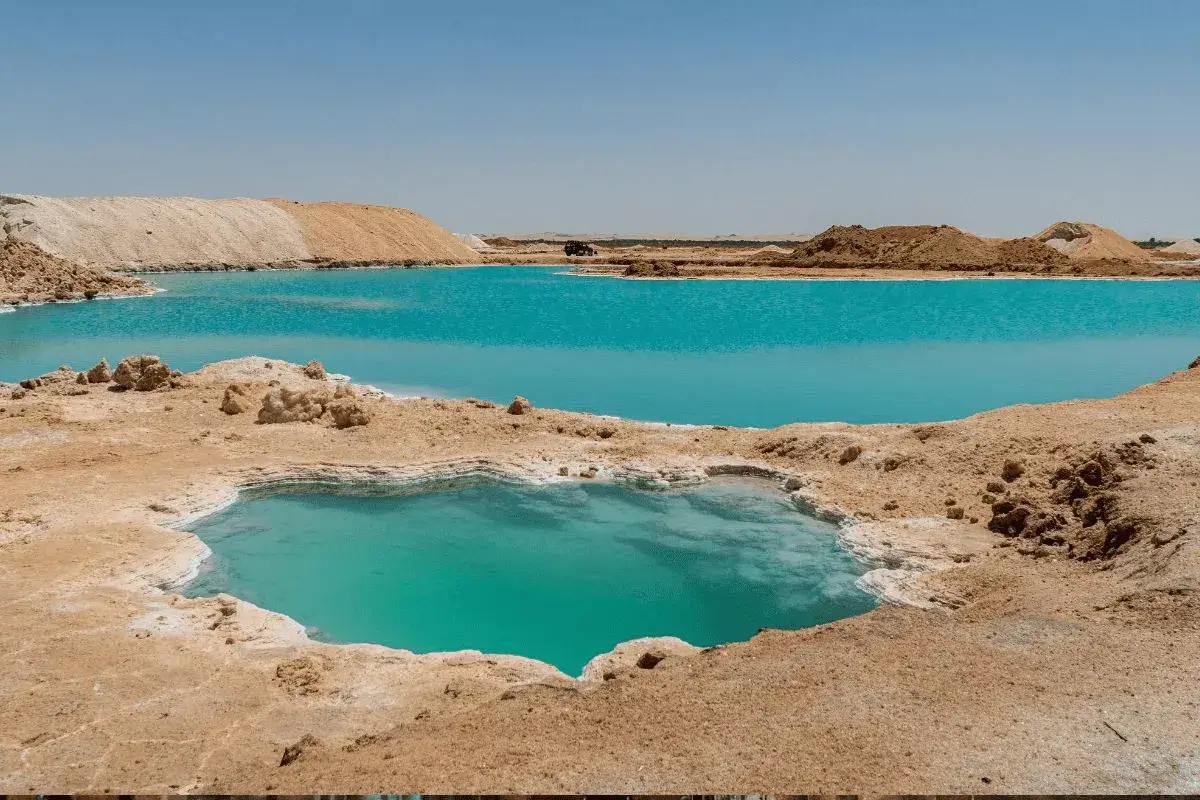
These lakes are refreshing year-round, but they are particularly delightful if you are looking for the best places for a summer vacation in Egypt that are off the beaten track.
Desert Adventures: The Great Sand Sea
Siwa is the gateway to the Great Sand Sea, an ocean of dunes stretching as far as the eye can see. No trip to Siwa is complete without a 4×4 desert safari. Adrenaline junkies can enjoy dune bashing and sandboarding, while those seeking peace can enjoy a Bedouin tea by a campfire under the Milky Way.
Practical Tips for Visiting Siwa
Best Time to Visit
The desert climate can be extreme. The ideal time to visit Siwa is from October to April when the weather is mild and pleasant. Summers can be very hot, although this is the season for traditional sand bath treatments used for medical purposes. Read more about timing your trip in our article: What is the best time to visit Egypt?.
Getting There and Around
Siwa is remote, located about 750 km from Cairo. The journey is long but rewarding. You can travel by bus or private car. For a seamless experience, booking with the best travel agency in Egypt ensures comfortable transport and expert guides.
Currency and Tipping
While some hotels accept credit cards, cash is king in Siwa, especially for buying local crafts like salt lamps, dates, and olive oil. Familiarize yourself with Egypt’s currency and understanding local etiquette is crucial; check our guide on tipping in Egypt.
Combining Siwa with Other Egyptian Wonders
A trip to Siwa is often part of a larger Egyptian adventure. Most travelers start in Cairo. Before heading to the desert, make sure to witness the Grand Egyptian Museum and the Giza Plateau.
If you prefer a mix of history and luxury, consider our luxury Egypt travel packages, which can be customized to include Siwa, a Nile Cruise, and even a relaxing stay at the Red Sea.
Conclusion
Siwa Oasis is a destination that touches the soul. It offers a rare combination of adrenaline-pumping adventure in the Great Sand Sea and profound relaxation in its salt lakes and springs. It is a place to disconnect from the modern world and reconnect with nature and history. Whether you are floating in turquoise waters, climbing the fortress of Shali, or sipping tea with the locals, Siwa leaves an indelible mark on every traveler.
Frequently Asked Questions (FAQ)
1. Is it safe to travel to Siwa Oasis?
Yes, Siwa Oasis is very safe for tourists. It is a peaceful community known for its hospitality. The road from Cairo to Siwa is paved and secured. For more context on safety, read our article on safety in Egypt.
2. How many days do I need in Siwa?
We recommend a minimum of 3 days and 2 nights to see the main attractions like the Shali Fortress, the Salt Lakes, and do a desert safari. However, staying 4 to 5 days allows for a more relaxed pace to truly soak in the atmosphere.
3. Can I swim in the Salt Lakes?
Absolutely! Swimming in the Salt Lakes is a highlight of any trip to Siwa. The water is very buoyant due to the high salt content. Just remember to rinse off with fresh water immediately after swimming to remove the salt crust from your skin.
4. What should I wear in Siwa?
Siwa is a conservative community. While swimwear is acceptable at the springs and lakes (especially the secluded ones), it is respectful to dress modestly when walking around the town or visiting the market. Cover your shoulders and knees to show respect for the local culture.
5. How do I book a trip to Siwa?
You can book a hassle-free experience through Nile Empire. We offer comprehensive packages, such as the Siwa Oasis Excursion from Cairo, which includes transportation, accommodation, and guided tours.
