
Standing on the banks of the Nile River, Luxor is widely regarded as one of the most extraordinary historical destinations in the world. Often referred to as the world’s greatest open-air museum, this ancient city contains some of the most remarkable temples, tombs, and monuments ever built by human civilization. From the colossal columns of Karnak Temple to the hidden burial chambers of the Valley of the Kings, the list of Luxor attractions reads like a journey through the golden age of ancient Egypt.
Most travelers encounter Luxor while exploring Egypt through multi-day itineraries or scenic Nile cruises that sail between Luxor and Aswan. Others arrive on carefully planned cultural journeys such as our curated Egypt tour packages, which combine Cairo, the Nile Valley, and the Red Sea into a seamless experience. For those short on time, guided excursions like a Luxor day tour from Cairo by air make it possible to witness these legendary monuments in a single unforgettable day.
In this comprehensive guide, we will explore the top Luxor tourist attractions, explain the difference between the East Bank and West Bank sites, and highlight the best ways to experience them. Whether you are planning a relaxed historical journey or a packed sightseeing adventure including iconic experiences like a Luxor hot air balloon ride, this guide will help you discover why Luxor remains one of the most fascinating destinations in Egypt.
Luxor Attractions: The Ultimate Guide to Temples, Tombs & Ancient Wonders
Luxor is often described as the world’s greatest open-air museum, and for good reason. Located along the Nile River in southern Egypt, this historic city was once the ancient capital of Thebes, the most powerful religious center of ancient Egypt during the New Kingdom period.
Today, travelers visiting Luxor can explore magnificent temples, royal tombs, and monuments that are over 3,000 years old. From the colossal columns of Karnak Temple to the mysterious underground tombs in the Valley of the Kings, Luxor attractions offer one of the most extraordinary historical experiences anywhere in the world.
Whether you’re planning a short visit or exploring Egypt through one of our curated Egypt tour packages, this guide will introduce the most important attractions in Luxor and help you plan the perfect itinerary.

Quick Overview of the Top Luxor Attractions
| Attraction | Location | Why It’s Famous |
|---|---|---|
| Karnak Temple | East Bank | Largest religious complex ever built |
| Luxor Temple | East Bank | Spectacular temple illuminated beautifully at night |
| Valley of the Kings | West Bank | Royal burial ground of ancient pharaohs |
| Temple of Hatshepsut | West Bank | Unique terraced temple dedicated to Egypt’s famous female pharaoh |
| Colossi of Memnon | West Bank | Two massive statues guarding ancient Thebes |
The East Bank: Temples of the Living
In ancient Egyptian belief, the east bank of the Nile represented life and rebirth because the sun rises in the east. For this reason, the most important temples were constructed here.
Karnak Temple Complex
The Karnak Temple Complex is one of the most impressive architectural achievements in human history. Built over nearly two thousand years by successive pharaohs, the complex contains massive halls, obelisks, sacred lakes, and countless hieroglyphic inscriptions.
The most famous section of Karnak is the Great Hypostyle Hall, where 134 enormous stone columns rise dramatically above visitors.
Explore Karnak With a Guided Tour
Experience Karnak Temple with an expert guide during our Luxor Full Day East & West Bank Tour.
Luxor Temple
Unlike many other temples, Luxor Temple was primarily dedicated to royal ceremonies and the famous Opet Festival, which symbolized the renewal of the king’s divine authority.
Today, Luxor Temple is especially stunning at night when the entire structure is illuminated, creating one of the most memorable sights in Egypt.
Visitors can also enjoy a spectacular Sound & Light Show at Karnak Temple, where the story of ancient Thebes is brought to life through narration and dramatic lighting.
The West Bank: Land of the Pharaohs
While the East Bank represented life, the West Bank symbolized the afterlife. This is where ancient Egyptians built tombs for kings, queens, and nobles.
Valley of the Kings
The Valley of the Kings served as the royal burial ground for Egypt’s most powerful pharaohs during the New Kingdom. More than sixty tombs have been discovered here, many decorated with vibrant paintings depicting the journey to the afterlife.
You can read a full guide here:
Explore the Valley of the Kings
Temple of Hatshepsut
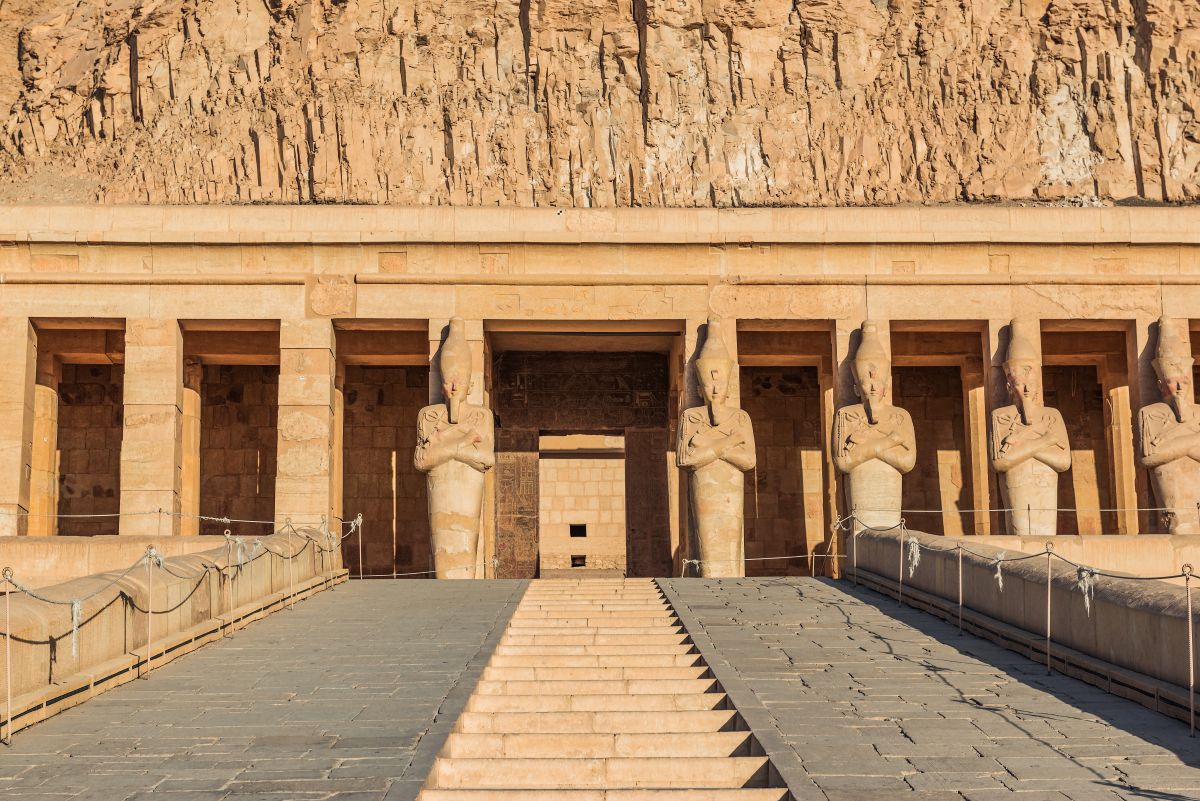
One of Luxor’s most striking monuments is the mortuary temple of Queen Hatshepsut, built dramatically against the cliffs of Deir el-Bahari.
The temple features elegant terraces and detailed reliefs describing Hatshepsut’s famous trading expedition to the mysterious land of Punt.
Colossi of Memnon
Standing guard at the entrance to the Theban Necropolis are the gigantic Colossi of Memnon, two seated statues of Pharaoh Amenhotep III that have watched over Luxor for more than 3,400 years.
Unique Experiences in Luxor
Hot Air Balloon Ride Over Luxor
One of the most unforgettable experiences in Luxor is floating above the temples and tombs at sunrise.
You can enjoy breathtaking aerial views with our Luxor Hot Air Balloon Ride.
Dendera and Abydos Temples
If you want to explore beyond Luxor, the nearby temples of Dendera and Abydos offer some of the best-preserved reliefs in Egypt.
Discover these remarkable sites on our Dendera and Abydos Day Tour.
Best Ways to Visit Luxor
Luxor can be visited independently, but many travelers prefer guided tours for deeper historical insight and easier access to the sites.
Popular ways to explore Luxor include:
- Guided day tours from within Luxor
- Day trips such as Luxor Day Tour from Cairo by Air
- Luxury Nile River Cruises
Frequently Asked Questions About Luxor Attractions
How many days should you spend in Luxor?
Most travelers spend between two and three days exploring Luxor in order to visit both the East Bank temples and the West Bank tombs.
What are the most famous attractions in Luxor?
The most famous Luxor attractions include Karnak Temple, Luxor Temple, the Valley of the Kings, the Temple of Hatshepsut, and the Colossi of Memnon.
Is Luxor worth visiting?
Yes. Luxor is considered one of the most important archaeological destinations in the world and contains some of Egypt’s most impressive ancient monuments.
What is the best time to visit Luxor?
The best time to visit Luxor is between October and April when temperatures are cooler and more comfortable for sightseeing.

