
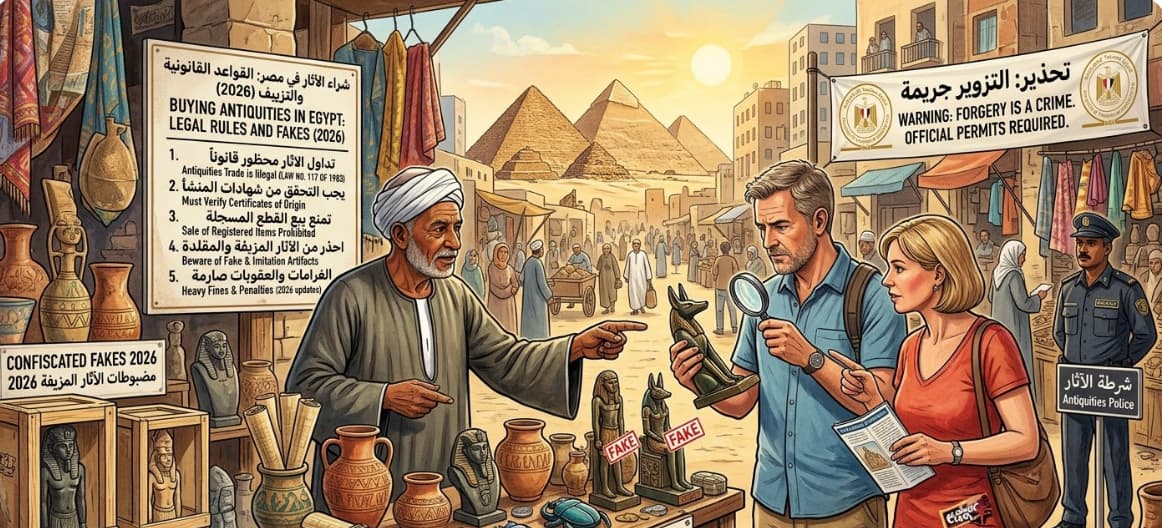
There is a profound, almost magnetic allure to the history of ancient Egypt. When you stand in the shadow of the Great Pyramid or walk through the towering, hieroglyph-covered columns of Karnak Temple, it is completely natural to want to capture a physical piece of that magic. You want a tangible connection to the pharaohs to take back home and place on your mantle. However, this perfectly innocent desire makes tourists highly vulnerable to one of the most complex aspects of Egyptian travel: navigating the murky waters of souvenir shopping, aggressive street vendors, and the very serious legal boundaries surrounding the nation’s heritage.
If you are planning a trip, you must have a crystal-clear understanding of buying antiquities in egypt legal rules and fakes. The reality is stark: attempting to purchase, smuggle, or export genuine historical artifacts from Egypt is a severe federal crime that carries devastating penalties, including heavy fines and lengthy prison sentences. Conversely, the bustling tourist markets are flooded with highly convincing fakes and reproductions, often sold by charismatic hustlers claiming they possess “real” relics recently unearthed from a secret desert tomb.
As senior travel specialists operating on the ground in Cairo, we believe that education is your absolute best defense. You do not have to spend your vacation feeling anxious or suspicious of every merchant you encounter. By learning the strict legal realities, understanding the psychology of souvenir scams, and knowing how to identify high-quality artisanal replicas from mass-produced plastic junk, you can shop with total confidence. This comprehensive guide will illuminate the exact rules you must follow, teach you how to authenticate premium souvenirs, and ensure your Egyptian adventure remains a joyous, stress-free experience.

Quick Snapshot: The Reality of Antiquities in Egypt
Before we dive deep into the specific laws and the intricate psychological tactics used by street merchants, let us establish the absolute baseline facts. The table below provides a rapid, crucial overview of what is legal, what is illegal, and what you are actually buying when you visit the local bazaars.
Is It Legal to Buy Antiquities in Egypt? Law No.117 Explained
To truly understand the landscape of buying souvenirs in Egypt, you must first understand the law. Prior to the mid-20th century, the global antiquities trade was a chaotic free-for-all, resulting in thousands of priceless Egyptian artifacts being shipped off to private collections and foreign museums around the world. To halt this devastating cultural hemorrhage, the Egyptian government enacted strict legislation.
All Heritage Belongs to the State
Under Egypt’s Law No. 117 of 1983 (and its subsequent, even stricter amendments in 2010 and 2018), all antiquities discovered in Egypt are considered public property and belong exclusively to the state. There is absolutely no legal domestic or international market for ancient Egyptian artifacts. You cannot go to a specialized dealer in Cairo and buy a genuine 3,000-year-old shabti figure legally. Any establishment claiming to be a “licensed antiquities dealer” selling real artifacts to tourists is lying to you.
If you encounter a merchant who attempts to sell you a “real” antiquity, one of two things is happening, and both are bad for you:
- They are lying (The Scam): They are trying to sell you a cheap, modern replica at an astronomically inflated price by exploiting your desire for authenticity.
- They are telling the truth (The Crime): They are attempting to involve you in a major federal felony involving the smuggling of stolen national heritage.
The penalties for smuggling antiquities are severe. Airport security in Egypt is incredibly robust, utilizing advanced X-ray technology specifically calibrated to detect the density of ancient stone and organic materials. If customs officials suspect you are carrying a genuine artifact, you will be detained, the item will be seized and examined by an archaeological committee, and you could face massive fines or imprisonment. The golden rule is simple: if it belongs in the Grand Egyptian Museum, it does not belong in your suitcase.
🏛️ See the Real Treasures Legally:
Instead of risking illegal purchases, gaze upon the greatest collection of genuine artifacts in the world with an expert. Book our Day Tour to Giza Pyramids and the Grand Egyptian Museum to safely immerse yourself in authentic history.
Common Antiquities Scams Tourists Face in Egypt: How the Scams Work
Since selling real antiquities is both illegal and highly unlikely, the vast majority of “antiquities” pitched to tourists in the streets are fakes. The merchants who sell these fakes are not merely shopkeepers; they are highly skilled actors utilizing elaborate psychological scripts to lower your defenses and empty your wallet.
The “My Grandfather Found This” Tale
This is the most pervasive script used by street hustlers, particularly near the Pyramids of Giza or the tombs in Luxor. A local will approach you, often looking nervously over his shoulder as if he is sharing a dangerous secret. He will pull a small, dirty, seemingly ancient statuette or coin from his pocket.
He will whisper a compelling story: “My grandfather was digging a well behind our village yesterday and uncovered a hidden tomb. The government doesn’t know about it. I cannot take this to the authorities, but I need money to feed my family. I will sell you this real piece of history for $200.”
The story is entirely fabricated. The object in his hand was likely mass-produced in a modern factory last week. The dirt caked onto it was deliberately rubbed on that morning. By creating a narrative of secrecy and illegal discovery, the hustler makes the tourist feel like they are getting an exclusive, once-in-a-lifetime opportunity, blinding them to the fact that they are buying a $2 piece of painted plastic or plaster.
The Artificial Aging Process
Egyptian scam artists are masters of artificial aging. They use incredibly creative techniques to make cheap replicas look like they have been buried in the sand for millennia. Common methods include:
- Burying objects in manure or acidic soil: This rapidly corrodes cheap metals (like brass or copper), giving them a convincing green patina (verdigris) that mimics ancient bronze.
- Baking plaster in ovens: This causes the material to crack and fissure, simulating thousands of years of extreme desert heat.
- Using shoe polish and tea: Vendors will soak cheap, modern papyrus (often made from banana leaves) in dark tea to stain it brown, then rub the edges with shoe polish or carefully burn them with a lighter to make the scroll look like a crumbling, ancient manuscript.

How to Buy Legal Egyptian Souvenirs Instead of Antiquities: How to Buy Quality Souvenirs
Understanding that everything you buy is a replica should not discourage you from shopping. In fact, it frees you to focus on what actually matters: craftsmanship. Egypt is home to incredibly talented artisans who have passed down carving, weaving, and painting techniques through generations. You can absolutely buy stunning, museum-quality reproductions that will look beautiful in your home.
The key is knowing how to differentiate between a high-quality artisanal piece and a cheap, mass-produced fake designed to trick tourists.
Mastering Papyrus
Papyrus is the ultimate Egyptian souvenir, but the market is saturated with terrible fakes. Authentic papyrus is painstakingly made by stripping the green rind of the Cyperus papyrus plant, slicing the pith into thin strips, soaking them, and pressing them together in a criss-cross pattern under immense weight.
How to spot the real deal: Authentic papyrus is incredibly strong and slightly heavy. If you hold it up to a light source, you should clearly see the horizontal and vertical fibers crossing each other. Furthermore, real papyrus will not easily crack or break if you attempt to gently roll or crumple the corner. Cheap fakes, often made from banana leaves or standard paper stamped with a pattern, will snap, crackle, and tear instantly when folded. Always buy from certified Papyrus Institutes rather than street hawkers.
🏺 Master the Art of the Bazaar:
Want to experience the thrill of Egyptian markets safely? Join our Tour to El Moez Street & Khan Elkhalili Bazaar. Your guide will protect you from scams and take you directly to certified, high-quality artisans.
Authenticating Alabaster
Alabaster carving is an ancient tradition, particularly prominent on the West Bank of Luxor near the Valley of the Kings. True Egyptian alabaster is a translucent, slightly soft stone that feels warm and smooth to the touch.
How to spot the real deal: The quickest way to test alabaster is the light test. Take out your smartphone, turn on the flashlight, and place it directly inside or behind the alabaster vase or statue. Genuine, hand-carved alabaster will beautifully transmit the light, glowing with a rich, translucent yellow or orange hue, revealing the natural veins of the stone. A fake piece, usually made from poured plaster or molded plastic resin, will completely block the light, remaining dull and opaque. Additionally, real alabaster is heavy and cool to the touch, whereas plaster fakes are suspiciously light.
Comparison: Premium Artisanal Replica vs. Street Fake
To help you navigate the bustling markets, let’s directly compare the characteristics of a high-quality reproduction versus a cheap scam piece.
Navigating Customs: The Importance of Receipts
One of the most critical aspects of buying high-quality replicas in Egypt is preparing for your departure at Cairo International Airport. As mentioned earlier, Egyptian customs officials take the protection of their national heritage extremely seriously.
If you purchase a beautifully carved, heavy basalt statue of Anubis from a master craftsman, it will look incredibly authentic on an airport X-ray scanner. It is highly likely that your bag will be pulled aside for physical inspection. You should never panic in this situation; the customs officers are simply doing their job.
This is precisely why you must demand an official, stamped receipt for any significant souvenir purchase. When the officer inspects the statue, you simply hand them the receipt from the certified artisan workshop. The receipt proves two things: first, that you acquired the item through legal, commercial channels, and second, that the item is a declared modern replica, not a looted artifact. The officer will verify the receipt, repack your bag, and send you on your way with a smile. Without a receipt, you risk the item being confiscated for further, lengthy archaeological testing, which could cause you to miss your flight.
✈️ Ensure a Smooth Departure:
Don’t let airport logistics ruin the end of your trip. Pair your souvenir shopping with our reliable Airport Transfer service to guarantee you arrive at the terminal with plenty of time for customs checks.

The Ultimate Shield: Traveling with a Local Expert
You can memorize every scam in the book, carry a flashlight to test alabaster, and vigorously practice saying “no” to street vendors. However, the absolute best way to completely eliminate the stress of souvenir shopping in Egypt is to remove yourself from the defensive position entirely by traveling with a licensed guide.
When you book private tours in Egypt with a reputable agency, the dynamic shifts instantly. Street vendors and hustlers operate on an unspoken hierarchy, and they recognize licensed Egyptologists. When a vendor sees a tourist accompanied by a local professional, they almost universally back off. They know that a guide will not fall for their theatrical tricks and will intervene aggressively in Arabic if they step out of line.
Furthermore, an expert guide acts as your personal shopping advocate. If you tell your guide you want an authentic, hand-painted papyrus scroll or a genuine alabaster vase, they will bypass the tourist traps and take you directly to government-certified workshops. They will ensure you receive fair, local pricing without the need for aggressive haggling, and they will verify that you receive the proper receipts needed for a smooth experience at airport customs.
🚢 Shop Safely Down the Nile:
The best artisan shops for Alabaster and spices are located in Upper Egypt. Experience them safely by booking an unforgettable Aswan to Luxor Nile Cruise (4 Days / 3 Nights), fully escorted by our experts.
Conclusion: Shop Smart, Travel Safe
Egypt is a treasure trove of art, culture, and history, and bringing a piece of that artistic legacy home is one of the great joys of travel. By understanding the absolute illegality of purchasing genuine artifacts, you protect yourself from severe legal trouble. By recognizing the theatrical scripts used by street hustlers, you protect your wallet from overpriced fakes.
Embrace the vibrant markets, marvel at the skill of local artisans, and invest in high-quality, legally crafted replicas that support the modern Egyptian economy. Do not let the fear of scams dictate your vacation narrative.
Take control of your experience by trusting your journey to certified experts. We invite you to explore our highly secure, flawlessly executed Egypt travel packages. Let our local Egyptologists serve as your personal shield, negotiators, and storytellers, allowing you to simply relax and immerse yourself in the magic of antiquity. Contact our team today to plan your stress-free, scam-free Egyptian adventure.
Frequently Asked Questions (FAQs)
1. Can I take a small rock or piece of sand from the Pyramids as a souvenir?
Absolutely not. Removing any natural material, rock, or debris from the Giza Plateau or any archaeological site is strictly illegal. It is considered theft of national heritage. Airport scanners will detect stones in your luggage, and you will face severe questioning, confiscation, and potentially massive fines. Leave the sites exactly as you found them.
2. Are there any licensed dealers who sell real antiquities legally in Egypt?
No, there is no legal domestic market for genuine antiquities in Egypt. Since the passing of strict heritage laws in 1983, all artifacts are the exclusive property of the state. Anyone claiming to have a license to sell real ancient artifacts to tourists is running a scam. You can only legally purchase modern replicas.
3. How do I know if the papyrus I am buying is genuine or fake?
Genuine papyrus is strong, heavy, and features distinct criss-crossing fibers when held up to the light. It will not crack or break easily when gently bent. Fake papyrus, often sold cheaply on the streets, is usually made of dried banana leaves and will easily snap, tear, and crack when folded. Always buy from certified Papyrus Institutes.
4. Will airport customs confiscate my high-quality souvenir replicas?
Customs will not confiscate your replicas as long as you can prove they are modern reproductions. Because high-quality stone and metal replicas look authentic on X-ray machines, your bags may be inspected. Always demand a printed, stamped receipt from the artisan shop when you buy premium souvenirs and keep it handy to show the customs officers at the airport.
