
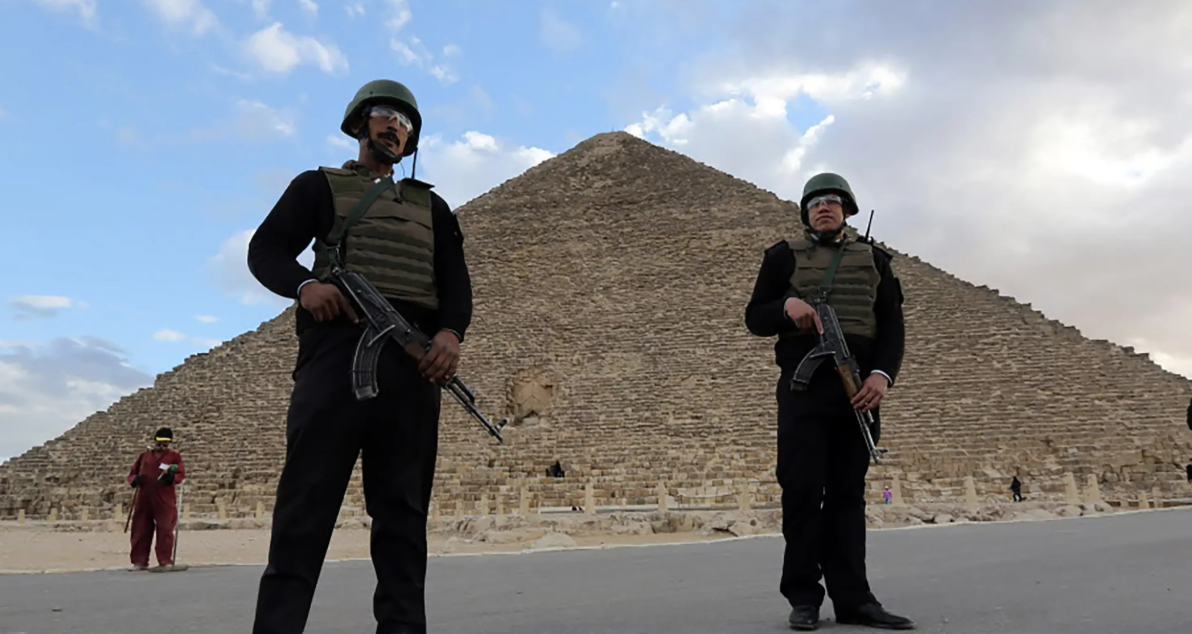
Here is a controversial truth that surprises most first-time visitors: those heavily armed, concrete-fortified police barricades you will inevitably encounter on Egyptian highways are the exact reason a road trip across the Sahara often feels statistically safer from random street crime than navigating downtown Paris, London, or San Francisco late at night.
To a Western traveler accustomed to open, borderless interstates, approaching a line of speed bumps flanked by officers holding automatic rifles triggers an immediate, visceral spike in anxiety. It feels inherently intimidating. Your mind races: Are we in danger? Did the driver do something wrong? Are we going to be interrogated?
The reality is entirely the opposite. The Egyptian government has engineered a massive, interconnected surveillance and transit grid explicitly designed to create a closed loop of protection around foreign visitors. If you plan on moving outside the immediate confines of your resort—whether you are heading into the mountains for a Sharm El Sheikh Desert Safari or driving between governorates—understanding exactly how police checkpoints in egypt what tourists should know is critical. Knowing the unspoken rules of these stops prevents you from inadvertently causing a massive bureaucratic delay and shifts your perspective from nervous anticipation to deep reassurance.
As veteran route planners managing hundreds of inter-city tourist transfers annually, we do not view these stops as hurdles; we view them as infrastructure. We are going to break down the exact documentation required, share a real-life incident of what happens when things get tense at midnight, and explain why the bureaucratic friction of these checkpoints should never, ever be your personal problem to solve.
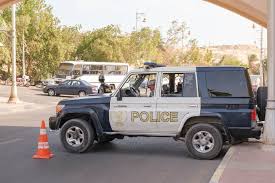
Quick Snapshot: The Anatomy of an Egyptian Checkpoint
Before we dive into the deep psychology and strict legalities, let’s strip away the mystery. The table below provides a rapid, honest overview of the operational mechanics of these stops.
The “Ezn” System: Egypt’s Invisible Ring of Steel
To understand why these stops exist, you must understand the invisible paper trail that dictates tourist movement in Egypt. When global security analysts evaluate why Egypt is one of the safest travel destinations in 2025, they point directly to the Ezn system.
Ezn (Arabic for permit or permission) is the backbone of the Tourism Police’s strategy. If a licensed agency wants to drive you from your downtown hotel for a Day Tour to Giza Pyramids and the Grand Egyptian Museum, they cannot simply load you into a van and turn the ignition. Up to 48 hours before your departure, the agency must submit a detailed manifest to the authorities. This includes your passport data, your exact visa entry stamp, the driver’s national ID, the vehicle’s registration, and an hour-by-hour route plan.
When your vehicle pulls up to a checkpoint, the officer is not looking for a reason to detain you. They are executing a verification protocol. They are checking the driver’s stamped Ezn against their ledger to confirm that an authorized vehicle, carrying specific foreign nationals, is exactly where it is supposed to be at the correct time. If a tourist vehicle deviates from its approved route, or fails to clear the next checkpoint within the mathematically expected timeframe, a regional alert is triggered.
Midnight in Luxor: A Real Checkpoint Story
Theory is one thing, but what does this friction actually feel like in the dead of night? Let us share a scenario that unfolded with two of our clients, John and Sarah, last November to illustrate the visceral reality of these stops.
John and Sarah booked one of our Luxor Airport Transfers. Their flight from Cairo had been delayed, and they finally cleared baggage claim at 1:45 AM. They were exhausted, jet-lagged, and disoriented by the dark, unfamiliar surroundings of Upper Egypt. About ten minutes into the drive toward the city center, the van’s brakes engaged. Ahead of them, cutting through the pitch-black desert, were the glaring halogen floodlights of a major security checkpoint.
As the van crawled over the speed bumps, Sarah tensed. Standing next to the concrete barrier was an officer in a heavy jacket, an AK-47 slung across his chest. He signaled for the driver to roll down the window and shined a harsh flashlight directly into the back seat, scanning John and Sarah’s faces. The silence in the cabin was suffocating.
In many developing nations, a 2:00 AM police stop with foreigners in the back seat is a recipe for extortion, bribes, or a massive, terrifying delay.
Instead, our driver, Ahmed, smoothly handed a clipboard out the window. “Nile Empire Tourism. Two Americans heading to the Winter Palace. Here is the stamped Ezn,” Ahmed stated in calm, authoritative Arabic.
The officer turned off the flashlight, cross-referenced the names on the paper with a clipboard of his own, and tapped the roof of the van. “Welcome to Luxor,” he said in heavily accented English, signaling the barricade to lift.
The entire terrifying ordeal lasted exactly 22 seconds.
Sarah exhaled sharply as the van accelerated. What felt like a high-stakes military interrogation to her was, in reality, a mundane barcode scan for the officer. The tension instantly evaporated because the bureaucratic groundwork had been flawlessly executed days before their plane even landed.

The 3 Absolute Rules You Cannot Break
While having a local driver handles 99% of the checkpoint friction, there are a few strict rules you, as the passenger, must internalize. Breaking these will immediately escalate the situation and turn a 20-second clearance into a 45-minute interrogation.
1. Put the Lens Away
In many Western democracies, filming police officers is a constitutionally protected civil right. In Egypt, it is a fast track to detention. Photographing military personnel, checkpoints, or police infrastructure is a federal offense.
If an officer spots the glare of your smartphone lens pointed out the window as you approach the barricade, your vehicle will be pulled to the shoulder. You will be ordered out of the car, your device will be seized, and you will be forced to manually delete the files under heavy scrutiny. It will deeply agitate your driver, who is personally responsible for your conduct under his license. When you see the halogen lights approaching, put your phone face down.
2. The Physical Passport Mandate
A digital photo of your passport on your iPhone is useless at a checkpoint. When the officer decides to run a spot-check against the driver’s Ezn, they require the original, physical booklet to verify the entry visa stamp. If your passport is buried at the bottom of your suitcase in the trunk of the van, you will hold up the entire line of traffic while you unpack on the side of a dusty highway. Your passport must remain in your pocket or a small day-bag inside the cabin during all inter-city transit.
🚔 The Police Convoy Exception:
If you are venturing to remote historical sites, standard checkpoints escalate into full escorts. When you book our Tour to Abu Simbel by Coach from Aswan, you will experience the famous police convoy, where all tourist vehicles travel together across the desert under armed protection.
3. Do Not Engage in Small Talk
This is not the time to practice your conversational Arabic or ask for directions. The officers are managing hundreds of vehicles under grueling conditions. They are processing data, not acting as tourism ambassadors. Maintain a neutral, polite demeanor. If an officer says “Welcome,” simply nod and say “Thank you.” Do not initiate conversation; let the bureaucratic transaction happen.
Comparison: The Brutal Reality of Going Solo vs. Agency Support
Many independent travelers attempt to rent a car and drive themselves across Egypt to save money. To illustrate why this is universally considered a terrible idea by travel experts, let us compare the checkpoint experience of a solo driver versus a tourist using an official agency.
Inter-City Transit: The Coastal Highway Example
Let’s apply this to a specific, popular route. If you book a Cairo to Alexandria Tour, you will be driving along the Desert Road, a major 220-kilometer artery connecting the capital to the Mediterranean coast. Because this is a massive commercial and domestic transit route, the checkpoints at the toll gates are heavily fortified.
For an independent traveler, the Cairo exit checkpoint can be a nightmare of explaining why a foreigner is driving a domestic rental car toward the coast. For our clients, it is an opportunity to take a nap in a climate-controlled van. The driver hands over the toll fee and the Ezn simultaneously, the officer matches the license plate to the pre-approved list, and the vehicle enters the highway without the tourists ever needing to take out their earbuds.

Conclusion: Stop Fighting the Bureaucracy
When you boil it down, navigating police checkpoints in egypt what tourists should know is a masterclass in accepting local infrastructure. These heavily armed barricades are not a sign of instability; they are the ultimate proof of a government aggressively prioritizing the physical safety of its tourism economy. They are the reason you can drive through the Sahara Desert with profound peace of mind.
However, that peace of mind only exists if you respect the rules. Don’t let a missing piece of paper, an aggressively pointed camera lens, or a misunderstood Arabic phrase leave you stranded on a dusty highway shoulder for two hours while your driver argues with an officer.
The bureaucratic friction of Egypt is very real, but it absolutely does not have to be your problem to solve. Stop trying to navigate complex Middle Eastern security protocols with Google Maps and a rental car. Let us absorb the logistics.
By booking your itinerary through our comprehensive Aswan to Luxor Nile Cruise packages or land tours, you buy an invisible shield of clearance. We file the permits, we talk to the commanders, and we handle the paperwork. All you have to do is gaze out the window at 5,000 years of history passing by. Do not risk your vacation on a logistical error. Contact our route planners today, and let us guarantee your secure passage across Egypt.
Frequently Asked Questions (FAQs)
1. Do I need to bribe the police at Egyptian checkpoints to avoid delays?
Absolutely not. You must never offer money, gifts, or bribes to police officers at checkpoints in Egypt. These officers are executing strict national security protocols. Attempting to offer a bribe is a severe criminal offense and will immediately escalate a routine stop into a serious legal detention.
2. Can I use a digital copy of my passport on my phone at a checkpoint?
No, digital copies of your passport are not accepted at inter-city police checkpoints. The officers must physically inspect the original document and verify your specific Egyptian entry visa stamp against the driver’s manifest. Always carry your physical passport in the vehicle cabin during transit.
3. Why do police sometimes hold tourist vehicles in a staging area early in the morning?
If you are traveling in remote areas, like the deep Western Desert, police will hold vehicles to form a secure “Convoy.” Instead of letting tourists drive isolated stretches alone, the police group all authorized vehicles together and escort them simultaneously to guarantee absolute safety against breakdowns or getting lost.
4. What happens if an unlicensed taxi driver takes me through a checkpoint?
If you hire an unlicensed, informal driver who lacks the official tourism Ezn (permit), you will likely be stopped and turned around. The police will not allow unauthorized domestic vehicles carrying foreigners to pass through major governorate borders, leaving you stranded and forcing you to find alternative, legal transport back to your hotel.
